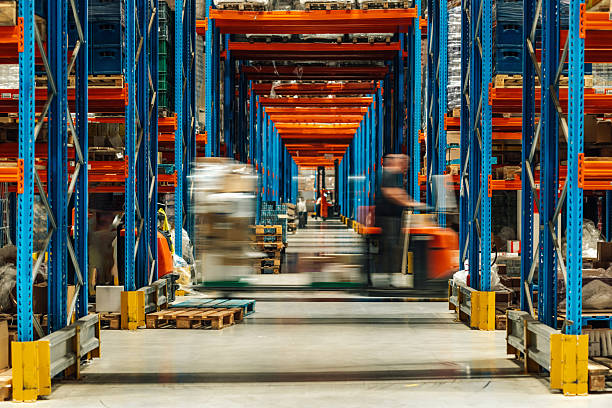
Most businesses don’t buy pallet racking systems. They buy whatever a catalog recommends, then spend the next few years working around a layout that never quite fit. Choosing the right pallet racking systems means starting from how inventory actually moves through a facility, not from a standard product list.
This guide walks through the real factors that should drive a pallet racking decision, from inventory type to budget to long-term flexibility. MTLI Group designs and installs pallet racking systems built around a client’s actual operation, not a generic template.
Start With Your Inventory, Not the Catalog
Before comparing pallet racking systems, a business needs a clear picture of what it is actually storing. Pallet dimensions, weight, SKU count, and how often each item moves all shape which racking configuration will work and which will create bottlenecks.
A facility with a small number of high-volume SKUs has very different needs than one managing hundreds of slow-moving items. Getting this assessment right from the start avoids a costly redesign down the road. For a broader look at how pallet racking systems are built and classified, our complete pallet racking guide covers the terminology and structure in more detail.
The Factors That Actually Decide Your Pallet Racking Fit
Several factors determine which pallet racking systems make sense for a given facility, and getting even one wrong can undermine the whole layout.
Pallet weight and dimensions set the required beam capacity and frame depth. Ceiling height determines how many storage levels a system can realistically use. Forklift type affects aisle width, since narrow-aisle equipment allows for denser layouts than standard counterbalance trucks. SKU velocity, meaning how quickly each product moves, decides whether a facility needs easy single-pallet access or can accept denser, less accessible storage. Our guide to pallet racking types breaks down how each of these factors maps to a specific racking configuration, which is a useful starting point before any supplier conversation.
Getting these factors wrong early tends to show up later as wasted floor space or slower picking, both of which are harder and more expensive to fix after installation than to plan for upfront. A deeper technical breakdown of how industrial racking systems are classified by type and use case is available in our dedicated post on the topic.
Matching Pallet Racking Systems to How You Pick and Store
Once the core factors are clear, the next step is matching them to an actual racking configuration. Different pallet racking systems trade off density against accessibility in different ways.
Selective pallet racking gives direct access to every pallet and works best for businesses with many SKUs that need frequent picking. Drive-in racking increases density by removing aisles, suited to bulk storage with few SKUs. Push-back racking offers a middle ground, using inclined rails so pallets roll forward as the front pallet is removed. Pallet flow racking uses gravity to move inventory on a first-in, first-out basis, ideal for high-turnover product with expiry dates or rotation requirements.
| Racking Configuration | Best For | Pallet Access |
|---|---|---|
| Selective Pallet Racking | High SKU count, frequent picking | Direct, every pallet |
| Drive-In Racking | Bulk storage, few SKUs | First-in, last-out |
| Push-Back Racking | Balanced density and access | Moderate |
| Pallet Flow Racking | High-turnover, FIFO product | Automatic rotation |
Businesses in warehousing and distribution frequently combine two or three of these configurations in one facility, assigning each to a specific zone based on how that product actually moves through the building.
What’s Driving Demand for Better Warehouse Storage Systems in Canada
Interest in upgrading warehouse storage systems has grown alongside steady expansion in the sector itself. Statistics Canada reported that warehousing and storage activity grew 2.7 percent in November 2025, contributing directly to broader gains in the transportation and warehousing sector that month. That kind of sustained growth puts pressure on existing storage layouts, since facilities handling more throughput need racking that can keep pace without constant reconfiguration.
Supply for racking components themselves also plays a role in project planning. Canada’s fabricated metal product manufacturing sector, which produces the structural steel used in pallet racking systems, includes 8,648 businesses nationwide, giving suppliers a range of domestic sourcing options for racking projects of different sizes. For a broader view of where warehouse technology is heading, our post on warehouse automation trends for 2026 looks at how racking decisions increasingly connect to automation planning. Facilities in manufacturing are particularly affected by this shift, since production and raw material storage zones often need very different racking configurations within the same building.
Budgeting for Pallet Racking Without Overspending or Undersizing
Cost comparisons between pallet racking systems rarely come down to price per unit alone. Install complexity, the number of accessories required, and how easily a system can be expanded later all affect the real cost of ownership over time.
Oversizing a system for current needs wastes capital that could go toward other facility improvements. Undersizing creates a near-term need for a second project, which usually costs more overall than getting the sizing right the first time. A facility serving 3PL and logistics clients needs to plan for client turnover and shifting SKU mixes, which makes modular, expandable pallet racking systems a safer long-term investment than a highly specialized, fixed configuration.
| Budget Factor | Lower Upfront Cost | Higher Upfront Cost |
|---|---|---|
| Configuration | Selective racking | Drive-in or pallet flow |
| Flexibility | Lower, fixed depth | Higher, easier to reconfigure |
| Install Complexity | Simpler | More involved |
| Best Fit | Growing, changing SKU mix | Stable, high-volume bulk storage |
Businesses in e-commerce fulfillment often favour the lower end of this range, since fast-changing SKU counts make a flexible, easily reconfigured racking layout more valuable than maximum density alone.
Selection Mistakes That Cost Businesses Later
A common mistake is choosing pallet racking systems based on the lowest quoted price without accounting for accessories, seismic bracing, or load labelling, all of which add cost once a full compliant system is specified. Businesses also sometimes skip a proper site assessment, resulting in racking that does not account for sprinkler clearance, column spacing, or existing dock door locations. Our guide on warehouse design best practices covers several of these layout considerations in more detail.
Choosing a configuration based on current inventory alone, without planning for growth, is another frequent issue. A system that fits perfectly today can become a bottleneck within a year or two if SKU count or volume increases faster than expected. Working with an experienced installation team from the planning stage, rather than after a design is finalized, helps catch these gaps before they become expensive change orders.
How MTLI Guides Clients Through Pallet Racking Selection
MTLI Group starts every pallet racking project with a site assessment covering inventory type, ceiling height, forklift fleet, and growth plans, rather than defaulting to a standard configuration. Our team walks through the tradeoffs between density and accessibility specific to each client’s operation. For businesses weighing different installation partners, our post on choosing a pallet racking installation company outlines what to look for beyond price alone.
For clients whose racking project is part of a larger facility build or renovation, our construction and general contracting team coordinates racking design with the broader construction timeline, keeping both under one accountable project rather than two separate efforts.
Choose Your Pallet Racking Systems With MTLI
Choosing the right pallet racking systems comes down to matching configuration, density, and budget to how a facility actually operates, not to a standard catalog listing. Businesses that take the time to assess inventory, growth plans, and picking patterns before committing to a layout avoid the most common and costly racking mistakes.
MTLI Group works with businesses across Canada to design pallet racking systems suited to their specific inventory and facility layout. Contact our team to talk through your next racking project.