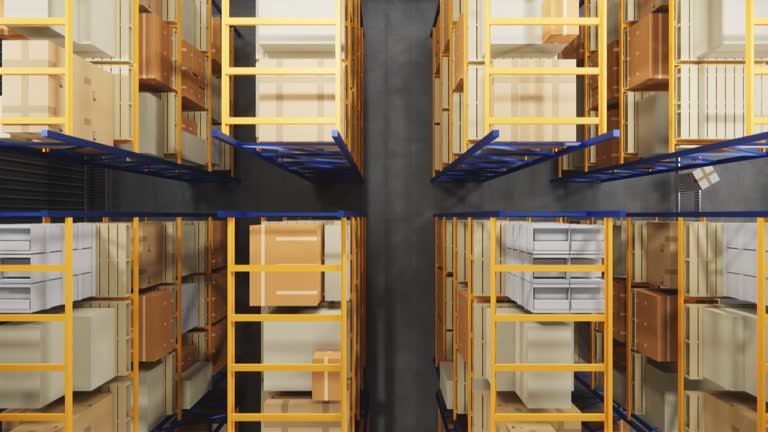
Floor space in a warehouse only goes so far, but the air above it rarely gets used to its full potential. An automated storage and retrieval system changes that equation, placing and retrieving pallets or totes from tall, narrow storage structures without a forklift operator driving up and down every aisle. The result is more product stored in less footprint, with faster, more accurate retrieval than manual methods typically allow.
This guide looks at how an automated storage and retrieval system works, what it takes to plan one properly, and why more Canadian facilities are making the investment. For context on where automation is headed more broadly, our recent look at warehouse automation trends for 2026 covers the wider shift happening across the industry.
What Sets an Automated Storage and Retrieval System Apart From Manual Storage
An automated storage and retrieval system, often shortened to ASRS, uses motorized shuttles, cranes, or robotic carriers to move inventory into and out of storage locations without a person physically retrieving each item. A warehouse management system directs the equipment to the correct location, places or picks the load, and logs the transaction automatically.
Manual storage depends on forklift travel time, aisle width for turning, and a human operator locating the right pallet among many. An automated storage and retrieval system removes most of that friction, operating in aisles too narrow for a forklift and reaching heights well beyond what manual equipment can safely access. This difference is a big part of why warehouse space optimization has become such a central topic for facilities planning new builds or major renovations, a theme our guide on warehouse design best practices for distribution centres covers in more depth.
The Technology Working Inside Every ASRS Installation
A handful of core technologies make an automated storage and retrieval system function reliably day after day.
Stacker cranes or shuttle carriers move vertically and horizontally within the storage structure, placing and retrieving loads on command. Rail or track systems guide this movement with precision, keeping the automated storage and retrieval system aligned to exact storage coordinates. Warehouse management software coordinates every transaction, tracking inventory location in real time and queuing retrieval requests efficiently. Sensors and safety interlocks stop equipment automatically if an obstruction or fault is detected, protecting both the structure and anyone working nearby.
The racking structure underneath an ASRS matters just as much as the automated equipment itself. Our pallet racking systems are engineered to the tight tolerances an automated storage and retrieval system requires, since even small misalignments in beam spacing can interfere with automated placement accuracy.
Matching ASRS Configurations to Warehouse Needs
Not every automated storage and retrieval system looks the same. The right configuration depends on load type, throughput needs, and available ceiling height.
Unit-load ASRS handles palletized goods, typically for high-volume, lower-SKU operations where dense bulk storage matters most. Mini-load ASRS manages smaller totes or cartons, suited to operations with many individual SKUs and frequent order picking. Shuttle-based systems use multiple independent carriers per aisle, offering higher throughput for facilities with heavy order volume. Carousel systems bring product to a stationary picker rather than moving a person through the aisle, reducing walking time significantly.
| ASRS Configuration | Load Type | Best Fit |
|---|---|---|
| Unit-Load ASRS | Full pallets | High-volume, bulk storage |
| Mini-Load ASRS | Totes, cartons | High SKU count, frequent picking |
| Shuttle-Based System | Mixed loads | High-throughput operations |
| Carousel System | Small parts | Fast, repetitive order picking |
Choosing between these options often starts with the racking layout underneath, which is why our complete guide to pallet racking systems is a useful starting point for facilities still mapping out their storage strategy before adding automation on top of it.
Why Canadian Warehouses Are Turning to Automated Storage and Retrieval Systems
Several forces are pushing Canadian facilities toward automated storage and retrieval systems faster than in previous years. Payroll employment in warehousing and storage climbed 7.1 percent year over year as of October 2025, one of the fastest-growing subsectors tracked within transportation and warehousing. That pace of hiring growth puts real pressure on facilities trying to scale operations without a proportional jump in labour cost, a gap an automated storage and retrieval system helps close by reducing the manual labour needed per pallet moved.
Freight volume moving through the supply chain is climbing too. Intermodal shipments originating in Canada, largely containerized goods, rose 12.5 percent year over year to 3.1 million tonnes in January 2025. More freight moving through the system means more product that needs to be received, stored, and retrieved efficiently, placing a premium on high-density storage that a standard manual layout cannot always deliver. Facilities across warehousing and distribution are responding by pairing racking redesigns with warehouse automation investments rather than treating the two as separate projects.
Calculating the Space and Labour Payoff
The space gain from an automated storage and retrieval system comes from two sources: taller storage structures than manual equipment can safely reach, and narrower aisles since no forklift needs turning room. Combined, these two factors routinely allow facilities to store significantly more product within the same building footprint.
Labour savings follow a similar pattern. Fewer staff are needed to move the same volume of product, and retrieval accuracy improves since the system eliminates picking errors tied to human fatigue or misread labels. These gains compound for businesses serving 3PL and logistics clients, where storage density and order accuracy directly affect how many client contracts a facility can profitably support.
| Factor | Manual Storage | Automated Storage System |
|---|---|---|
| Storage Height | Limited by forklift reach | Significantly taller |
| Aisle Width Required | Wide, for forklift turning | Narrow |
| Picking Accuracy | Dependent on operator | Consistently high |
| Labour per Pallet Moved | Higher | Lower |
Manufacturing operations also benefit from this combination, particularly facilities in manufacturing that need to store both raw materials and finished goods without expanding their physical footprint.
Rollout Mistakes That Limit an ASRS Investment
The most common mistake is underestimating how precisely the racking structure beneath an automated storage and retrieval system needs to be installed. Even minor misalignment can cause repeated faults or slow down the automated equipment significantly, undermining much of the efficiency gain the project was meant to deliver. Choosing an installer without proven pallet racking experience is a frequent cause of this issue, which is why our guide on choosing the best pallet racking installation company in Canada walks through what to look for before signing a contract.
Skipping a maintenance plan after commissioning is another common gap. An automated storage and retrieval system still requires scheduled inspection of rails, sensors, and mechanical components to keep performing reliably, a topic covered in detail in our preventative maintenance guide for automated facilities. Businesses relocating to a new facility sometimes also underestimate the complexity of moving an existing automated system, a process our industrial relocation guide outlines for companies planning a move.
MTLI’s Role in Planning and Installing Automated Storage and Retrieval Systems
MTLI Group designs automated storage and retrieval systems around a facility’s actual throughput, SKU mix, and building constraints, rather than applying a standard configuration to every project. Our team assesses ceiling height, floor load, and current racking condition before recommending a specific ASRS configuration.
Our installation crews carry out the full build, coordinating racking, automated equipment, and controls under one accountable team so the automated storage and retrieval system performs as designed from day one.
Start Optimizing Space With an Automated Storage and Retrieval System From MTLI
An automated storage and retrieval system delivers measurable gains in storage density, labour efficiency, and order accuracy, making it one of the most effective investments a growing warehouse can make. As freight volumes and labour costs continue climbing across Canada, facilities that adopt an automated storage and retrieval system now position themselves ahead of competitors still relying on manual methods.
MTLI Group works with businesses across Canada to design and install automated storage and retrieval systems suited to their specific operation. Contact our team to talk through your warehouse space optimization goals.