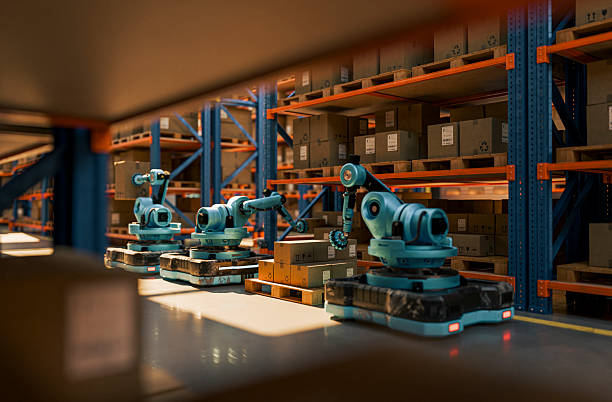
Knowing when to automate is not always easy. Invest too soon, and you may be paying for technology before your operation can make full use of it. Wait too long, and growing order volumes, labour pressures, limited storage, or recurring errors can start holding your warehouse back. The better approach is to look at the operational signals that show when your current processes are reaching their limits.
MTLI helps Canadian facilities assess those challenges before deciding which automation makes sense. From automated storage and retrieval systems to other warehouse technologies, the best solution depends on how your facility operates, what you handle, and where you need greater capacity or efficiency. This guide covers the key factors to consider before speaking with an ASRS company or investing in warehouse automation.
Reading the Signals: Is Your Warehouse Ready?
Before comparing vendors or pricing equipment, it helps to take an honest look at where the current operation is straining. A few common indicators tend to show up before a facility is ready to have this conversation seriously:
- Overtime hours climbing steadily without a corresponding increase in output
- Picking or fulfillment errors that keep repeating despite retraining
- Storage capacity maxed out even after reorganizing multiple times
- Difficulty filling open roles despite competitive pay
- New hires taking longer to reach full productivity as processes grow more complex
None of these alone means warehouse automation is the answer. Together, especially if they've persisted for more than a quarter or two, they usually mean manual capacity has hit its ceiling. A facility relying on ongoing maintenance to keep aging manual equipment running is often already past the point where automation would cost less than continued patchwork fixes.
The Capacity Ceiling: Space, Labour, and Throughput
Warehouse efficiency gets squeezed from three directions at once as volume grows: available floor space, available labour, and the physical limits of how fast product can move manually. When all three tighten at the same time, small inefficiencies that used to go unnoticed start compounding into real delays.
Retail activity across Canada gives a sense of how much pressure this puts on the supply chain feeding into warehouses. Canadian retailers closed out 2025 with $837.2 billion in total sales, up 4.0 percent from 2024, according to Statistics Canada, continuing a steady multi-year climb. Every dollar of that growth eventually passes through a warehouse floor somewhere, and manual processes don't scale proportionally with sales growth the way automated systems can.
Facilities in warehousing and distribution tend to hit this ceiling first in whichever dimension was already tightest, whether that's square footage, headcount, or throughput speed during peak periods. A facility that entered the year already short-staffed, for instance, usually feels labour constraints long before it runs out of physical space.
Cost Signals That Point Toward Automation
Capacity is not the only reason to consider automation. Your operating costs can also reveal when manual processes are becoming harder to sustain. Instead of looking at one expense in isolation, compare the costs that tend to rise when a warehouse is relying too heavily on labour, space, or manual handling.
| Cost Signal | What It Suggests |
|---|---|
| Rising overtime as a share of total labour cost | Manual capacity is being stretched past sustainable levels |
| Frequent emergency staffing or temp agency use | Workforce planning can't keep pace with demand swings |
| Storage costs from off-site overflow space | Current facility density has reached its practical limit |
| Error-driven returns or chargebacks | Manual picking accuracy is falling behind order volume |
If two or more of these costs are climbing at the same time, the math often favours automation sooner rather than later. This is particularly for operations built around dense storage using racking systems that were designed for a smaller inventory footprint than the business now carries. Tracking these costs on a simple monthly basis, rather than reviewing them only at year-end, usually surfaces the trend early enough to act on it.
Why the Timing Question Matters More in 2026
The decision to automate is becoming more important as investment across Canada's transportation and warehousing sector accelerates. Statistics Canada's latest capital and repair expenditures survey projects $61.0 billion in investment for the transportation and warehousing sector in 2026, more than twice the annual investment levels recorded before 2018. Statistics Canada survey That level of spending points to a sector that is actively investing in capacity, technology, and operational efficiency.
For warehouse operators, that broader trend matters because investment decisions can affect more than internal efficiency. Businesses may also be responding to:
- Higher customer expectations: Faster fulfilment and more reliable order accuracy are becoming increasingly important.
- Labour pressures: Facilities that continue relying heavily on manual processes may face higher staffing and overtime costs.
- Limited storage capacity: Growing inventory can put pressure on floor space and existing storage infrastructure.
- Competitive pressure: Companies investing in automation can increase throughput and consistency without increasing labour at the same rate.
- Future growth: Automation can provide additional capacity before a warehouse reaches a point where expansion becomes unavoidable.
The same considerations apply to manufacturing businesses that store and ship their own products. Improvements on the production floor can quickly lose their value if the warehouse cannot receive, store, pick, and ship that output efficiently. For these operations, warehouse robotics solutions is not simply a warehouse upgrade. It can be part of keeping the entire production-to-delivery process moving as demand grows.
What to Expect from an ASRS Company During Evaluation
Once your warehouse shows clear signs that automation could make a difference, the next step is understanding what a suitable system would actually look like. A qualified ASRS company should evaluate more than your current storage needs. They should look at the physical characteristics of your facility, inventory profile, expected throughput, and how the system will fit into your existing operation.
A thorough evaluation will typically cover several key areas:
| Evaluation Stage | What It Involves |
|---|---|
| Site Assessment | Ceiling height, floor load, column spacing, existing racking |
| Volume and SKU Analysis | Current and projected order volume, item variety |
| System Sizing | Matching ASRS scale to actual throughput needs, not maximum capacity |
| Integration Planning | How the system connects with existing software and workflows |
The goal is not to select the biggest system available. It is to find a solution that provides the capacity and throughput your operation actually needs, while leaving room for realistic growth. An oversized system can leave you paying for unused capacity, while an undersized system may become a limitation within a few years.
It is also important to consider how the automation will be installed and integrated into the facility. Coordinating the evaluation with your electrical installation company early can help identify site requirements, access limitations, and potential installation challenges before equipment arrives. A coordinated approach also gives you a clearer view of the project instead of having to reconcile separate recommendations from multiple vendors.
Warehouse Modernization Without Overcommitting
Warehouse modernization doesn't have to mean automating everything at once. Many facilities phase the investment, starting with the single biggest bottleneck and expanding from there once the first phase proves out.
A few ways to approach this without overcommitting budget upfront:
- Start with the process causing the most overtime or errors, not the most visually impressive upgrade
- Choose modular systems that can expand later rather than locking into a fixed maximum capacity
- Set a defined evaluation period after the first phase before committing to the next one
- Track a small set of clear metrics, like order accuracy and picks per hour, before and after each phase
This staged approach works especially well for businesses serving 3PL and logistics clients, where contract terms can shift and locking too much capital into a single oversized system early on limits flexibility later. It also gives a facility team time to build internal confidence with automated systems before expanding their footprint across the rest of the floor.
Talk to MTLI Before You Commit
Automation makes the most sense when it solves a clear operational problem. If overtime is climbing, storage is becoming harder to manage, orders are increasing, or manual errors are affecting fulfilment, those pressures may be telling you that your current setup is nearing its limits. Looking at these signals together can help you determine when the cost of staying manual is becoming greater than the cost of investing.
MTLI works with Canadian warehouse operators to assess those needs and develop an automation strategy around the facility's actual requirements. If you are weighing an ASRS or another automated solution, connect with MTLI to start the conversation.