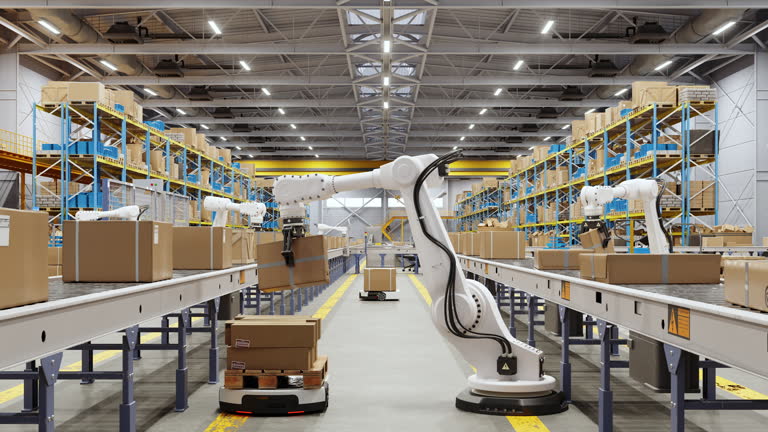
A parcel moves through a warehouse dozens of times before it ever leaves the building. It gets received, stored, picked, packed, and routed to the right outbound lane, and at nearly every one of those steps, a conveyor is doing the physical work of moving it. Conveyor sortation systems take that one step further, automatically directing each item to the correct destination without a person making that call by hand.
This guide explains how conveyor sortation systems work, the main sortation methods in use today, and why more Canadian warehouses are investing in automated sortation as order volume climbs. For a plain-language breakdown of the basics, our guide to what a conveyor system is is a good starting point before diving into sortation specifically.
What Sets Sortation Apart From a Standard Conveyor Line
A standard conveyor simply moves product from one point to another in a straight or branching line. A sortation system does something more. It identifies each item, usually through a barcode scan or RFID read, and automatically diverts it onto the correct path based on its destination, order, or shipping zone.
This distinction matters because warehouse sortation systems remove one of the most repetitive and error-prone tasks in a facility: manually reading labels and routing product by hand. Our earlier piece on how conveyor systems improve warehouse efficiency covers the broader efficiency case for conveyors generally, while sortation specifically focuses on accuracy and routing speed. Our conveyor systems team designs both standard and sortation-equipped lines depending on what a facility’s order profile actually requires.
Inside the Hardware That Powers Automated Sortation
A handful of core components work together to make conveyor sortation systems function reliably.
Scanners and sensors identify each item as it enters the sortation zone, reading a barcode or tag to determine where it needs to go. Diverters, which can be pop-up wheels, pushers, or tilt trays depending on the sortation type, physically redirect product onto the correct lane. Control software ties the scanning and diverting hardware together, matching each scanned item to its destination in real time. Motors and drives keep belts and rollers moving at the speed the sortation logic requires, often adjusting on the fly to avoid collisions between items.
Getting this hardware installed and calibrated correctly is where most of the performance gain comes from. Our conveyor installation crews handle the physical build, while our broader installations division coordinates sortation work alongside any other equipment going into the same facility.
Sortation Methods Compared for Different Order Profiles
Not every warehouse sortation systems setup uses the same diverting method, and the right choice depends heavily on item size, volume, and how many destination lanes a facility needs to serve.
Pop-up wheel sortation uses small wheels that rise to redirect items sideways, suited to lighter, uniform products moving at moderate speed. Tilt tray sortation carries items on individual trays that tilt to drop product into the correct chute, offering high accuracy for mixed-size orders. Cross-belt sortation uses small belts mounted on a moving carrier, allowing very high throughput for facilities with many destination points. Pusher sortation uses a simple mechanical arm to push items off the main line, a lower-cost option suited to lower-volume operations.
Facilities handling e-commerce fulfillment often choose tilt tray or cross-belt sortation, since order profiles tend to mix item sizes and require routing to many individual outbound lanes. Businesses in broader warehousing and distribution sometimes find pop-up wheel or pusher sortation sufficient, particularly where product is more uniform and destination counts are lower.
The Volume Surge Driving Sortation Investment
Order volume moving through Canadian warehouses keeps climbing, and that growth shows up clearly in national employment data. Employment in transportation and warehousing rose by 30,000 jobs, a 2.8 percent increase, in October 2025 alone, reflecting sustained hiring pressure across the sector as volume continues to grow.
The broader economic data tells the same story. Transportation and warehousing output rose 0.7 percent in December 2025, with growth driven in part by strength in couriers and messengers activity, the segment most directly tied to parcel and e-commerce order volume. For facilities serving 3PL and logistics clients, this kind of sustained volume growth makes manual sortation increasingly difficult to scale, since adding headcount to keep pace with order growth runs into both cost and labour availability limits.
Throughput and Labour: What Sortation Changes on the Floor
Automated sortation changes two things most directly: how fast product moves through a facility, and how much manual labour is needed to route it correctly. Manual sortation relies on staff reading labels and physically moving items, a process that is both slower and more prone to misrouting errors as volume increases. Automated sortation handles that same task at a fraction of the time per item, with far fewer errors.
Manufacturing operations handling finished goods distribution often see strong returns here too, since manufacturing facilities shipping to multiple retail or distribution partners need accurate routing just as much as pure fulfillment centres. Pairing sortation with broader warehouse automation planning, including storage and retrieval systems upstream, tends to deliver the strongest overall facility performance.
Where Sortation Projects Run Into Trouble
A common mistake is sizing a sortation system for current volume without accounting for peak season spikes, leaving a facility unable to handle its busiest weeks without falling back on manual workarounds. Choosing the wrong sortation method for the actual order profile is another frequent issue, since a system built for uniform, light items will struggle with mixed-size or fragile product it was never designed to handle.
Skipping ongoing calibration and maintenance after installation causes performance to degrade gradually, often without an obvious single failure point. Pairing a sortation system with a regular facility maintenance schedule catches sensor drift and mechanical wear before they start causing misroutes. Poor integration between the sortation control software and existing warehouse management systems is a further common gap, leading to a sortation line that runs well mechanically but still requires manual double-checking because the two systems do not share data properly. Working with an experienced conveyor installation team from the design stage helps avoid most of these issues before they reach the warehouse floor.
MTLI’s Work Building Conveyor Sortation Systems
MTLI Group designs and installs conveyor sortation systems matched to a facility’s actual order profile, rather than applying a single standard configuration to every project. Our team starts with item size, volume, and destination count before recommending a sortation method.
We also integrate sortation hardware with the control software already running on a client’s floor wherever possible, since a properly connected conveyor system delivers far more value than one running in isolation from the rest of the facility’s technology.
Start Your Conveyor Sortation Systems Project With MTLI
Conveyor sortation systems give warehouses a reliable way to keep up with rising order volume without scaling labour at the same pace. As automated sortation becomes more common across Canadian distribution and fulfillment operations, facilities still relying on manual routing fall further behind on both speed and accuracy.
MTLI Group works with businesses across Canada to design and install conveyor sortation systems suited to their specific order profile and volume. Contact our team to talk through your facility’s sortation needs.