A customer clicks "buy." They expect their order to arrive fast, in good condition, and exactly as described. If it does not, they do not usually complain. They just buy from someone else next time. For e-commerce operators, this is the real stakes of warehouse performance. Every order that ships late, arrives wrong, or goes missing is a customer relationship that quietly ends.
Retail e-commerce sales in Canada reached $4.3 billion in December 2025, making up 6.1% of all retail trade. That volume comes with expectations. Canadian online shoppers want speed. They want accuracy. And they increasingly have other options if you do not deliver both.
MTLI helps e-commerce operators across Canada build automated facilities that meet these expectations consistently. This guide covers the specific warehouse automation benefits that connect directly to customer satisfaction, and why the link between the two is stronger than most operators realise.
The Warehouse Is Where Customer Experience Actually Gets Made
Most e-commerce brands spend a lot on their website and their marketing. They spend less time thinking about what happens after a customer clicks "buy." But that is where the customer experience is actually delivered.
A fast, accurate shipment makes a brand look great. A late or wrong shipment makes the best product page and the most polished branding look hollow. The warehouse is not a back-end cost centre. It is the last mile of your brand promise before the customer opens the box.
Warehouse automation benefits flow directly to the customer in three clear ways. Orders ship faster. Orders ship more accurately. And peak season volume does not slow the operation down the way it does in a manual facility.
Fulfillment Speed: The Most Visible Automation Benefit
Fulfillment speed is the gap between when an order is placed and when it leaves the building. In a manual warehouse, this gap is variable. It depends on how many workers are on shift, how quickly they can locate items, and how backed up the packing station is at any given moment.
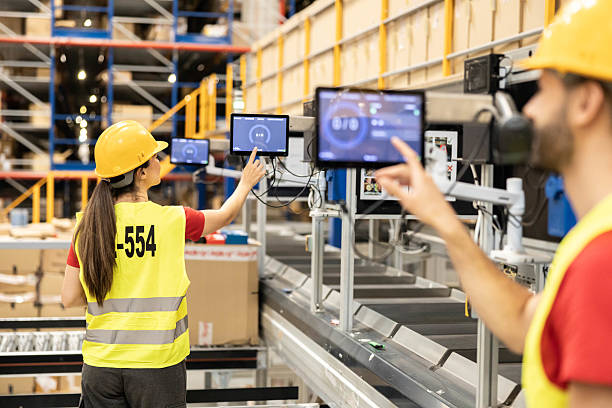
In an automated warehouse, this gap shrinks and becomes predictable. A goods-to-person system brings the product directly to a fixed picking station rather than sending a worker to walk the aisles. A conveyor carries the packed order to the shipping dock without manual transport. A sortation system routes it to the correct outbound lane automatically.
Each of these steps removes time from the order cycle. Combined, they can cut the time from order receipt to shipment by a meaningful margin, particularly during peak periods when manual warehouses are most likely to fall behind. This speed gain shows up directly as earlier delivery dates on the checkout screen, which customers notice and respond to.
Order Accuracy: The Benefit That Protects Repeat Business
Speed matters, but accuracy matters just as much. A wrong item shipped means a return, a reship, and a customer who has to wait even longer for what they actually ordered. Most customers who experience this do not give you a second chance.
In a manual picking environment, errors accumulate. Workers misread labels. They pick the wrong size or the wrong colour variant. They pack correctly but attach the wrong shipping label. Each of these errors has a cost beyond the reship. It has a retention cost.
Warehouse automation benefits in this area are specific. Barcode-verified picking systems confirm the correct item before it enters the box. Automated sortation confirms the correct lane before a package reaches the dock. These checks happen at the speed of a scan, not at the speed of a tired worker reading a label at the end of a shift.
The accuracy gain from these systems is measurable. Most facilities see a significant drop in mis-picks after installing verified picking technology. For an e-commerce operator, each avoided mis-pick is an avoided return and an avoided lost customer.
Table 1: How Automation Connects to Customer-Facing Outcomes
| Warehouse Automation System | What It Does | Customer-Facing Outcome |
|---|---|---|
| Goods-to-person picking | Brings product to a fixed station | Faster order processing, shorter ship times |
| Barcode-verified picking | Confirms correct item at point of pick | Fewer wrong items shipped |
| Conveyor and sortation systems | Routes orders automatically to outbound lanes | Faster dispatch, fewer misrouted shipments |
| Real-time inventory tracking | Updates stock levels continuously | Fewer orders placed for out-of-stock items |
| Automated packing stations | Right-sizes packaging per order | Fewer damaged goods in transit |
Inventory Accuracy: Avoiding the Worst Customer Experience
Few things frustrate a customer more than ordering something, receiving confirmation, and then getting a cancellation or a delay because the item was not actually available. This happens in warehouses where inventory counts run behind reality.
In a manual warehouse, inventory is counted periodically. Between counts, the system's record of what is in stock can drift away from what is actually on the shelf. Products get misplaced. Pick failures occur. Orders get cancelled after placement.
Real-time logistics efficiency through automated tracking solves this. Sensors and software update inventory levels continuously as items move through the facility. When a picker takes an item, the count adjusts immediately. When stock falls below a set threshold, replenishment triggers automatically.
The result is a website that only shows customers what you actually have. Fewer false confirmations. Fewer post-order cancellations. A cleaner, more reliable customer experience before the order even ships.
Peak Season Performance: Where Manual Operations Lose Customers
Peak season is where many e-commerce operators lose the customers they spent the whole year acquiring. Order volume spikes. Delivery windows are the most important they will be all year. And manual operations often slow down exactly when they need to speed up.
Hiring temporary staff for peak season is the traditional answer. But temporary staff make more errors. They take time to train. And they rarely reach the pick rate of an experienced core team within a short peak window.
Automated systems scale differently. A conveyor or sortation system that handles 5,000 orders per day does not need to be trained to handle 9,000. It runs at the same pace. The same accuracy. The same speed. This consistency during peak is one of the clearest warehouse automation benefits for any e-commerce operator whose busiest season is also their most competitive.
The brands that win customer loyalty during peak are the ones that deliver on time while competitors fall behind. Automation is the infrastructure that makes this possible.
Real-Time Visibility Benefits Both the Warehouse and the Customer
Modern e-commerce customers expect to know where their order is at every stage. They want tracking updates. They want to know when their order was picked, when it was packed, and when it left the building.
An automated warehouse generates this data naturally. Every scan, every conveyor movement, every sortation decision creates a timestamped record. Your order management system can surface this data to customers as tracking updates without any additional manual effort.
This visibility also helps your team manage exceptions. If a product is not where it should be during picking, the system flags it immediately. A supervisor can act in minutes rather than finding out hours later when a customer calls about a missing item.
How Automation Reduces Damage and Improves Unboxing Experience
Product damage during picking and packing is another common source of customer dissatisfaction. Manually handled goods get dropped, compressed into the wrong box size, or moved carelessly when workers are rushing during peak periods.
Automated packing stations address this. They measure each item and select the appropriate packaging. They apply protective fill precisely. They seal and label without the variation that comes from rushed manual packing at the end of a busy shift.
Table 2: Automation ROI Through Customer Satisfaction Metrics
| Metric | Manual Operation Baseline | Automated Operation Target |
|---|---|---|
| Order accuracy rate | 96 to 98% | 99 to 99.9% |
| Average time from order to ship | 12 to 24 hours | 4 to 8 hours |
| Peak season throughput decline | Significant drop | Minimal, absorbs spikes |
| Inventory accuracy | 95 to 97% | 99%+ |
| Return rate from wrong items | Higher | Significantly lower |
Common Mistakes E-Commerce Operators Make
A few recurring mistakes affect whether automation actually delivers its customer satisfaction benefits.
- Automating picking without fixing inventory accuracy. Fast picking of the wrong item or an out-of-stock item does not improve customer experience. Fix the data foundation first.
- Sizing the system for normal volume, not peak volume. A system that handles daily volume but falls behind during peak misses the period where customer loyalty is most at risk.
- Skipping software integration. Automation only improves customer visibility if the systems communicate properly with your order management platform.
- Treating returns as a separate problem. A high mis-pick rate generates a high return rate. Automation that improves accuracy also reduces the returns burden directly.
- Not measuring before and after. Without baseline data on accuracy, ship times, and returns, it is hard to quantify what automation has actually delivered.
How MTLI Builds Automation Infrastructure for E-Commerce Operators
MTLI designs and installs automated fulfillment systems for e-commerce operations across Canada. Our warehouse automation team selects systems matched to your actual order profile and SKU mix, ensuring the automation fits your specific products rather than a generic setup.
For facilities needing structural or electrical upgrades to support new systems, our construction and general contracting team handles that work as part of the same project. Our storage and racking solutions team designs storage layouts that support fast, accurate picking. Our installations crews manage commissioning and software integration before go-live.
Building a Warehouse That Earns Customer Loyalty
Warehouse automation benefits go well beyond labour cost reduction. They show up in every order that ships on time. In every item that arrives exactly as ordered. In every peak season that runs without the delays that drive customers to competitors.
For e-commerce operators, the warehouse is where customer satisfaction is built or broken. Automation gives you the tools to build it consistently, at scale, across every order you ship.
If your operation runs in e-commerce fulfillment, warehousing and distribution, or 3PL and logistics, MTLI can assess your facility and design an automation plan built around the customer outcomes that matter most to your business.
Contact MTLI to start a warehouse automation benefits assessment for your operation.