- Read multiple barcodes (1D and 2D/QR) simultaneously, even if they are damaged, poorly printed, or covered by plastic wrap.
- Identify products based on features like shape, size, colour, or even text on a label (Optical Character Recognition - OCR).
- Detect defects, damage, or inconsistencies, such as a dented can, a crushed corner on a box, or incomplete packaging.
- Verify dimensions and volume (cubing) to ensure items fit in designated locations or shipping cartons.
- Provide real-time feedback to guide robotic arms or divert products on a conveyor.
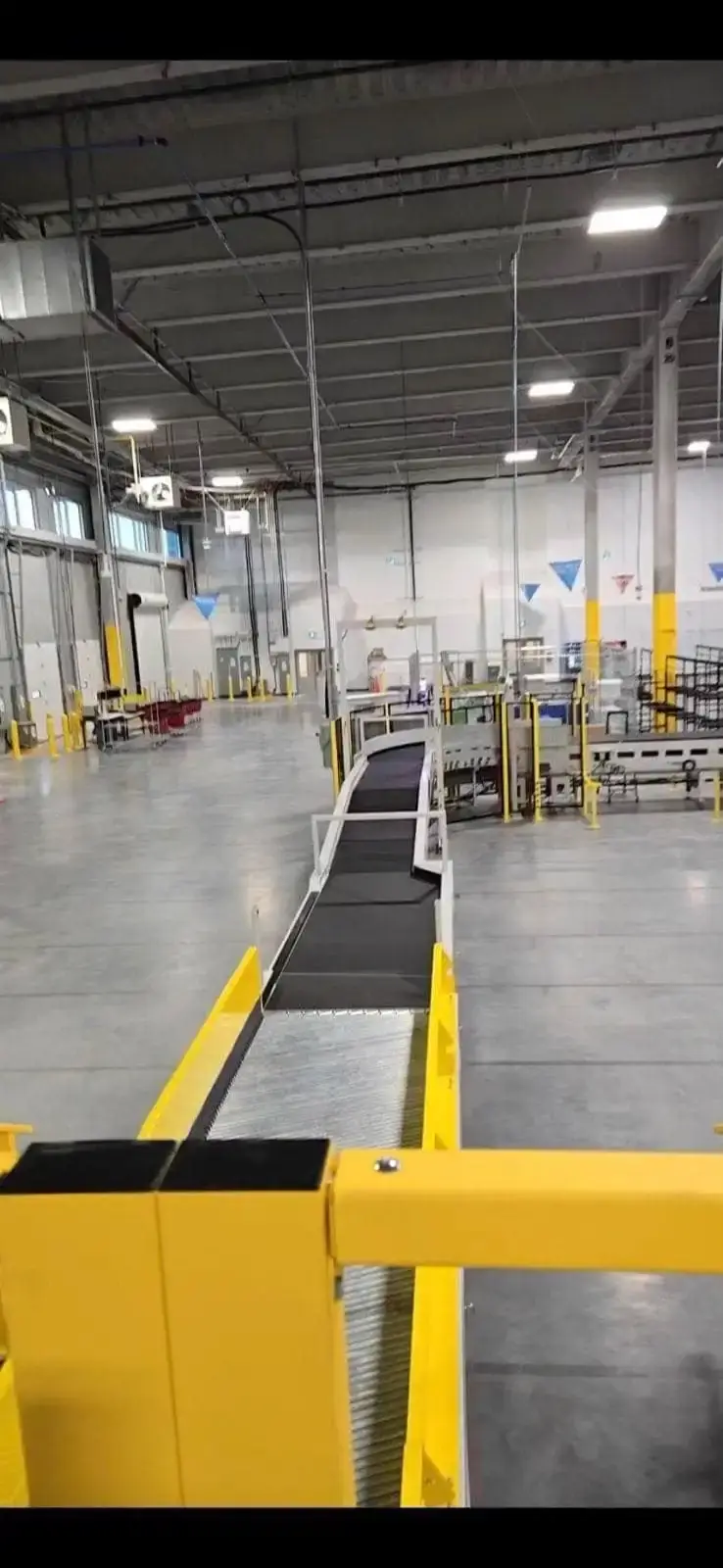
- **On Conveyor & Sortation Systems:** At the induction point of a sorter, a vision-based scan tunnel can capture weight, dimensions, and barcode data in a fraction of a second, ensuring the item is routed correctly and providing accurate data for shipping.
- **With Robotic Picking & Packing:** 3D vision systems allow robots to identify and pick individual items from a mixed bin, a task that was once impossible to automate. Post-pick, another camera can verify the item before it's placed into the shipping container, ensuring order accuracy.
- **In Receiving & Putaway:** As pallets are unloaded, vision systems can scan all labels, check for pallet damage or overhang, and automatically verify the shipment against the advanced shipping notice (ASN) in your WMS, flagging discrepancies instantly.
- **On AS/RS Induction:** Before a pallet or tote enters an Automated Storage and Retrieval System, a vision-based profiling system confirms it meets the exact dimension and weight specifications, preventing costly jams and downtime within the system.
- **Define Clear Objectives:** What specific problem are you solving? Are you reducing mispicks, automating damage detection, or improving traceability? Clear KPIs are essential for measuring success.
- **Assess Your Physical Environment:** Factors like ambient lighting, dust levels, conveyor speed, and temperature can all impact a vision system's performance. A thorough site assessment is crucial.
- **Plan for Data Integration:** The most critical piece is the software layer. How will the vision system's output (e.g., 'pass/fail', 'item SKU', 'package dimensions') trigger actions in your Warehouse Control System (WCS) or WMS? This requires deep integration expertise.
- **Choose the Right Partner:** You need a partner who understands not just the vision hardware but also the material handling equipment it connects to and the software that ties it all together. A partner with a track record of large-scale integrations can navigate the complexities and de-risk your project.