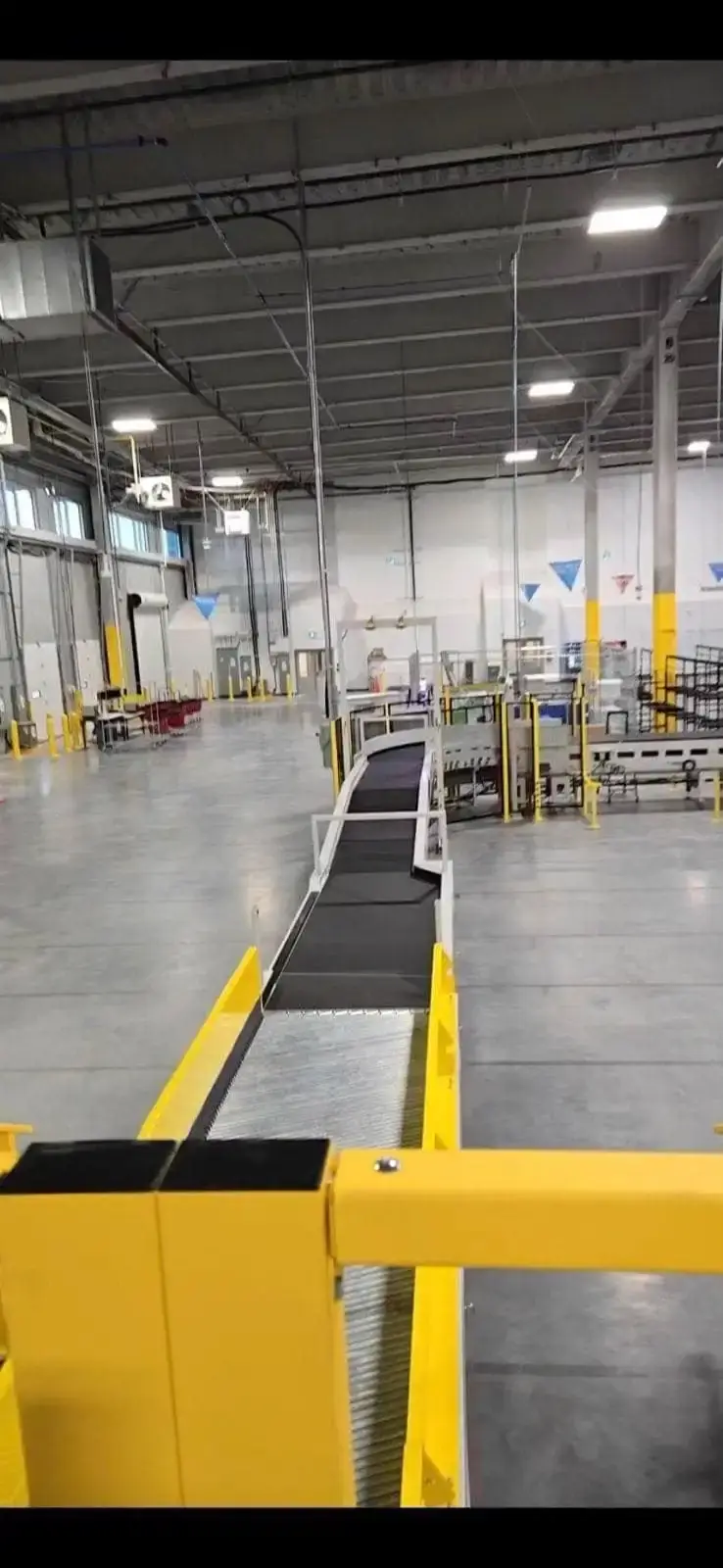
In the modern logistics landscape, the question is no longer whether to automate, but when and how much. As global e-commerce demands soar and labor markets tighten, warehouse operators are facing unprecedented pressure to deliver more goods, faster and with fewer errors. Warehouse automation, once a luxury reserved for Fortune 500 giants, has become a strategic necessity for businesses of all sizes looking to maintain a competitive edge. However, the significant upfront capital expenditure required for automated systems often creates a barrier to entry. This comprehensive guide dives deep into the true Return on Investment (ROI) of warehouse automation, moving beyond simple cost-savings to explore how technology transforms operational efficiency, scalability, and long-term profitability. By the end of this article, you will understand how to quantify the tangible and intangible benefits of automation, allowing you to build a robust business case that aligns with your facility's long-term growth objectives.
Quantifying Labor Savings: The Primary ROI Driver
Labor costs typically account for 50% to 70% of a warehouse's total operating budget. In an era of rising minimum wages and high turnover rates, often exceeding 40% in manual environments, automation offers a stabilized solution. When calculating ROI, the most immediate metric is the reduction in 'touches' or man-hours required to move a unit from receiving to shipping. For example, Autonomous Mobile Robots (AMRs) can reduce travel time by up to 50% by handling the 'horizontal' movement of goods, allowing workers to remain in picking zones. To calculate this, businesses should look at the 'Fully Burdened Labor Cost,' which includes wages, benefits, payroll taxes, insurance, and the hidden costs of recruitment and training. If an automated system replaces the need for five full-time employees across two shifts, the annual savings can easily exceed $500,000 in many North American markets. Furthermore, automation mitigates the cost of 'overtime' during peak seasons, as machines can run 24/7 without fatigue or premium pay rates.
Throughput and Accuracy: Beyond the Bottom Line
While labor savings are tangible, the impact of automation on throughput and accuracy often provides the highest long-term value. Automated Storage and Retrieval Systems (AS/RS) and high-speed sorters can process orders at rates human teams simply cannot match. A manual picker might manage 60 to 80 picks per hour; an automated goods-to-person system can skyrocket that figure to 300 or even 600 picks per hour. This increase in throughput translates directly to higher revenue capacity without expanding the facility's footprint. Equally important is error reduction. The cost of a mispick is remarkably high, estimates suggest it costs between $50 and $100 per error when accounting for return shipping, restocking, customer service labor, and lost customer lifetime value. Automation technologies like pick-to-light or vision-guided systems can achieve 99.9% accuracy. For a facility processing 10,000 orders a day, reducing the error rate from 1% to 0.1% saves 90 orders per day from the costly returns cycle, adding hundreds of thousands of dollars back to the annual profit margin.
Maximizing Real Estate: The Value of Vertical Density
Industrial real estate costs have surged across North America, with prime warehouse space commanding record-high rents. Automation allows companies to defer or avoid the massive expense of moving to a larger facility by maximizing the cube of their existing space. Traditional forklift-based racking requires wide aisles (10–12 feet), whereas automated systems like Very Narrow Aisle (VNA) AGVs or high-density shuttle systems can operate in a fraction of that space. Many AS/RS solutions allow for storage heights of up to 100 feet, utilizing vertical space that is otherwise wasted. By increasing storage density by 40% to 60%, a company can effectively double its inventory capacity within the same four walls. When calculating ROI, this 'avoided cost' of a new lease or building construction must be included. If a $2 million automation project prevents a $10 million warehouse expansion, the ROI is achieved almost instantly. Furthermore, denser storage leads to lower utility costs per pallet, as heating, cooling, and lighting requirements are concentrated over a more productive area.
Safety, Ergonomics, and Risk Mitigation
A often overlooked component of ROI is the reduction in workplace injuries and associated insurance premiums. Warehouse work is physically demanding, involving heavy lifting, repetitive motions, and high-traffic environments where forklifts and pedestrians interact. According to OSHA, the average cost of a single workers' compensation claim for a musculoskeletal disorder is roughly $30,000, not including the loss of productivity or the cost of temporary replacement labor. Automation takes over the 'dull, dirty, and dangerous' tasks. Cobots (collaborative robots) can handle heavy lifting, while AGVs follow programmed paths that eliminate the risk of forklift collisions, one of the leading causes of warehouse fatalities. By reducing the EMR (Experience Modifier Rate) through a safer work environment, companies can negotiate lower insurance premiums. Additionally, a safer, more ergonomic environment improves employee retention. In a market where replacing a warehouse worker costs $5,000 to $7,000 in onboarding and training, keeping your experienced staff is a significant financial win.
Scalability and Future-Proofing the Supply Chain
Traditional warehouse operations are difficult to scale. When volume spikes, managers must scramble to hire and train temporary labor, often resulting in lower quality and higher costs. Modular automation provides a 'pay-as-you-grow' model. Many modern AMR and shuttle systems allow for the addition of more units as demand increases, providing a level of agility that manual operations lack. This scalability is a key factor in ROI because it prevents 'over-provisioning', you don't have to build a warehouse for your 5-year peak today; you can build for today and add robots tomorrow. Furthermore, automation provides data-driven insights. Integrated Warehouse Management Systems (WMS) and Warehouse Execution Systems (WES) provide real-time visibility into inventory levels and bottleneck locations. This data allows for more accurate forecasting and leaner inventory management, reducing the amount of capital tied up in stock. In a volatile global market, the ability to pivot quickly and maintain high service levels during disruptions is an intangible benefit that often outweighs the initial hardware costs.
Calculating the Payback Period: A Practical Framework
To determine the true ROI, stakeholders should look at the Payback Period and Internal Rate of Return (IRR). A typical warehouse automation project aims for a payback period of 18 to 36 months. To calculate this, sum the total investment (hardware, software, installation, and training) and divide it by the annual net savings (labor reduction + error reduction + real estate savings + safety savings - maintenance costs). It is crucial to perform a 'Sensitivity Analysis', how does the ROI change if labor costs rise by 5% or if order volume drops by 10%? Modern CFOs also look at the 'Cost of Inaction.' If your competitors automate and reduce their cost-per-pick while yours remains stagnant or rises, the loss of market share and price competitiveness becomes a liability. Working with an experienced integration partner can help refine these numbers, ensuring that the chosen technology aligns with specific SKU profiles and order flows, which is the most critical factor in ensuring the projected ROI becomes a reality.
Conclusion: Building Your Automation Roadmap
The transition to an automated warehouse is a journey, not a single event. While the initial investment can seem daunting, the multi-faceted ROI, spanning labor efficiency, extreme accuracy, space optimization, and enhanced safety, makes a compelling case for modernization. By moving away from manual, error-prone processes, businesses can transform their logistics centers from cost centers into engines of growth. The key to success lies in a balanced approach: identifying the high-impact areas for immediate automation while planning for long-term scalability. As you evaluate your facility's needs, remember that technology is only as effective as the physical infrastructure and strategic planning supporting it. At MTLI Group, we specialize in bridging the gap between vision and execution. From high-density racking systems and mezzanine construction to full-scale facility management and automation integration, our team provides the industrial expertise needed to maximize your ROI. Contact MTLI Group today to discuss how we can help you design and build the high-performance warehouse of the future.