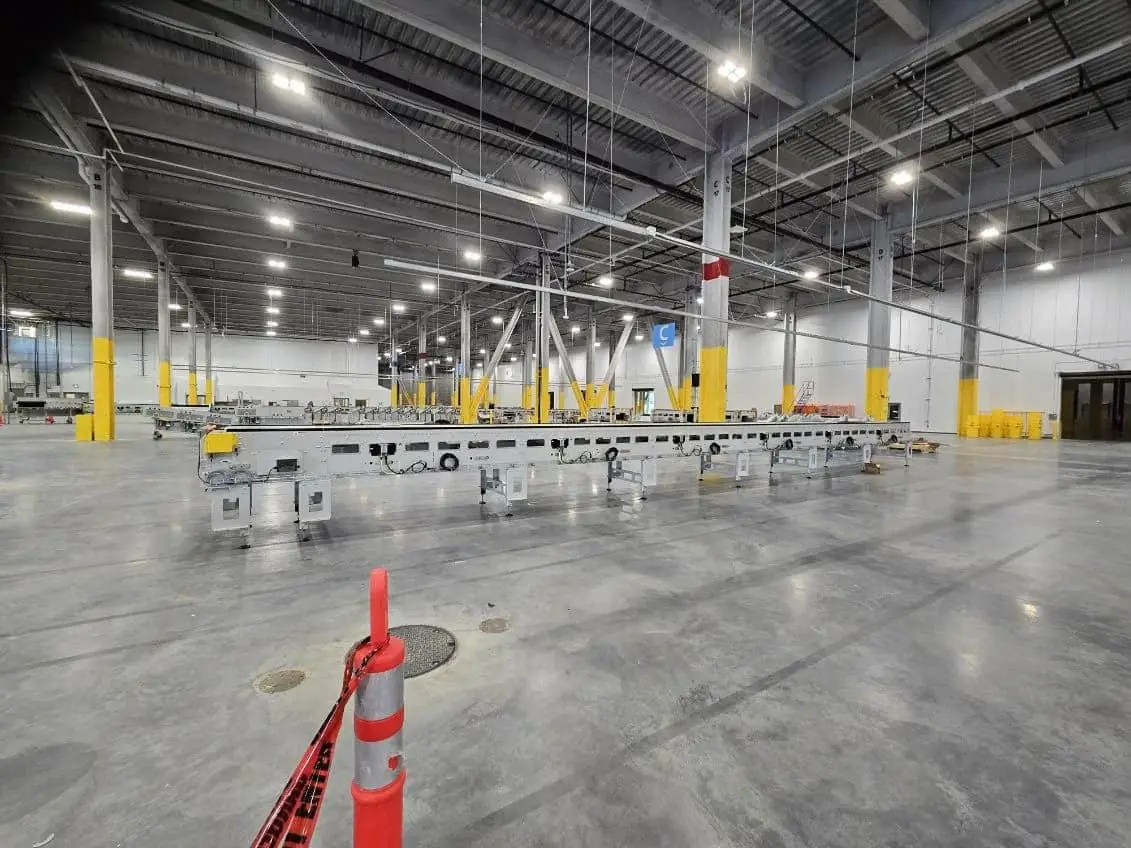
- **Dramatically Increased Throughput:** Automation systems like Autonomous Mobile Robots (AMRs), Goods-to-Person (GTP) stations, and high-speed sorters can increase order fulfillment capacity by 2x to 5x within the same square footage. This allows you to handle peak seasons, a major challenge in the Canadian retail calendar, without seasonal hiring bottlenecks.
- **Labour Optimization & Upskilling:** In a tight labour market, automation allows you to do more with your existing team. It automates repetitive, physically demanding tasks like walking and carrying, freeing up skilled employees to focus on value-added activities like quality control, exception handling, and technical supervision.
- **Maximized Space Utilization:** Many Canadian warehouses are constrained by their physical footprint. Automation, particularly when paired with optimized <a href="/services/storage-racking">storage and racking systems</a> like high-density racking or Vertical Lift Modules (VLMs), can increase storage density by 50% or more. You gain capacity without expanding the building.
- **Near-Perfect Accuracy:** Manual picking errors lead to costly returns and dissatisfied customers. Automated systems, guided by sophisticated Warehouse Execution Software (WES), achieve accuracy rates of 99.9%+, protecting your margins and brand reputation.
- **Faster ROI than New Construction:** A retrofit project is typically faster and significantly less capital-intensive than a greenfield build. By leveraging your existing asset, you can begin realizing operational benefits and a return on investment in a fraction of the time.
- Floor Assessment & Reinforcement: ASRS and other heavy systems require specific slab flatness and load-bearing capacity.
- Power & Data Infrastructure: Upgrading electrical systems for charging stations and ensuring robust Wi-Fi coverage for mobile robots.
- Safety Systems: Installing fencing, sensors, and fire suppression systems compliant with Canadian safety codes.
- Structural Modifications: Potential changes to racking, mezzanines, and conveyor supports.
- Phase 1 (Crawl): Assess & Optimize. Start with a thorough analysis of your current operations. Sometimes, the biggest gains come from optimizing your existing layout, upgrading your racking systems, or implementing simple conveyance. This foundational step ensures you're automating good processes, not bad ones.
- Phase 2 (Walk): Introduce Scalable Tech. Implement flexible automation that can grow with your business. AMRs are a perfect example. You can start with a small fleet to automate point-to-point transport or assist in picking zones, then add more robots as volume increases.
- Phase 3 (Run): Full-Scale Integration. Once you have proven the value and your team is comfortable with the technology, you can move toward more integrated, high-throughput systems like ASRS, robotic sorting, and advanced Goods-to-Person solutions.