What Is the Difference Between Racking and Storage Shelving in a Warehouse?
Ask five warehouse managers to define racking and storage shelving, and there's a good chance a few will use the terms interchangeably. They shouldn't. A racking and storage decision made without understanding the difference can mean the wrong system holding the wrong load, and that mistake tends to show up at the worst possible moment.
MTLI Group designs both systems for facilities across Canada, starting with correctly matched pallet racking systems built around what a facility actually stores.
Two Terms Warehouse Managers Often Mix Up
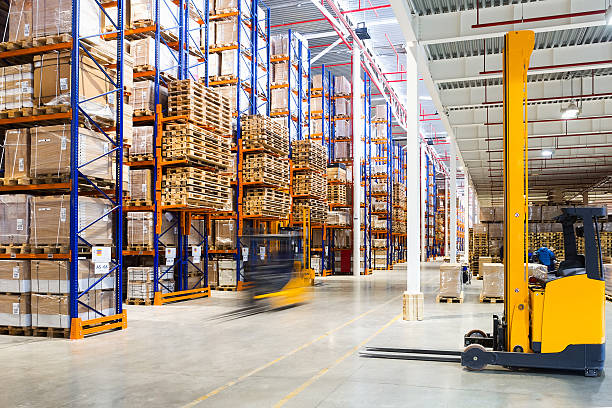
Racking and storage both hold inventory off the floor, which is likely why the terms get blurred so often in everyday conversation. But structurally, they are built for different jobs. A warehouse racking system is a heavy-duty steel structure designed to carry palletized loads, often supported by forklifts moving product in and out of defined bays. Shelving, on the other hand, is a lighter structure meant for hand-loaded goods: cartons, small parts, and individual items rather than full pallets.
The confusion is understandable, since both systems get lumped together under the general idea of warehouse storage racking . For a broader look at how different racking types serve different warehouse functions, our guide on industrial warehouse racking systems in Canada covers the full range of configurations businesses typically choose from.
How Racking and Shelving Are Actually Built Differently
The engineering behind a warehouse rack system reflects the loads it needs to carry. Upright frames and horizontal beams form the core structure, rated to hold specific weight limits per level, often supporting several thousand pounds per pallet position. These loads are usually moved into place with a forklift, which means the racking also has to account for impact resistance and clearance for equipment. Our complete guide to pallet racking systems breaks down what actually separates a racking system from shelving at a structural level.
Shelving units, by comparison, are built from lighter gauge steel or wire, designed for manual loading rather than mechanical handling. A shelf in a warehouse setting typically supports far less weight per level and is spaced for hand-reach access rather than forklift clearance. Because racking carries real structural weight, most installations also require engineering review and permitting before they go into service, something shelving rarely needs.
When Each System Makes Sense on the Floor
Choosing between racking and shelving comes down to what is actually being stored and how it moves through the facility.
Pallet racking makes sense wherever product arrives and leaves on pallets, which covers most bulk storage and high-volume distribution operations. Shelving suits smaller, hand-picked items where a forklift would be impractical, common in parts rooms, e-commerce fulfillment zones, and mixed-case picking areas. Some facilities need both, using pallet racking for bulk reserve storage and shelving for a fast-moving pick face closer to the shipping dock. Facilities that need a genuinely load-rated structure often turn to our structural racking division for configurations that standard shelving was never built to support.
| Storage Type | Load Handling | Best Fit |
|---|---|---|
| Pallet Racking | Forklift-loaded, high capacity | Bulk pallets, high-volume SKUs |
| Industrial Shelving | Hand-loaded, lower capacity | Small parts, mixed-case picking |
| Combined Layout | Both, zoned by function | Facilities with mixed inventory types |
Businesses weighing standard pallet racking against a higher-density configuration often benefit from our comparison of selective versus drive-in racking , which walks through how each option performs under different SKU counts and turnover rates.
The Growth Behind Canada's Storage Decisions
Getting the racking and storage decision right matters more as the sector itself keeps expanding. Warehousing and storage was among the industries driving national economic growth, with the sector's output rising 2.7 percent in a single month, according to Statistics Canada's most recent GDP by industry report . That kind of monthly growth signals sustained demand for storage capacity across the country, and businesses in warehousing and distribution adding capacity need to know whether they actually need pallet racking or whether shelving would serve their SKU mix just as well, at a fraction of the cost.
Getting this decision wrong carries safety consequences too. Federal data shows that disabling workplace injuries fell 9.5 percent between 2019 and 2024, with the disabling injury frequency rate dropping to 7.80 from 9.39 over that period , reflecting the impact of stronger safety practices across regulated workplaces. Choosing the correctly engineered system, rather than defaulting to whichever structure happens to be on hand, is part of that broader safety trend.
Cost and Capacity: Racking Against Shelving
Cost differences between the two systems track directly with their structural capacity. Shelving is generally the cheaper option upfront, since it uses lighter materials and requires less engineering. Pallet racking costs more per bay but delivers far higher storage density and load capacity, which usually pays off quickly in facilities handling real pallet volume. Some larger operations skip a traditional building envelope altogether and use the racking structure itself to support the roof and walls, an approach covered by our rack-supported building systems.
| Factor | Warehouse Shelving | Pallet Racking System |
|---|---|---|
| Upfront Cost | Lower | Higher |
| Load Capacity per Level | Lower | Higher |
| Storage Density | Moderate | High |
| Handling Method | Manual | Forklift-assisted |
For facilities looking to push density even further within a fixed footprint, our high-density storage solutions maximize pallet positions in a way shelving simply cannot match.
Mixing Up the Two Leads to These Problems
The most common and most dangerous mistake is loading shelving as though it were racking, placing palletized or forklift-handled loads onto a structure that was never rated for that kind of weight. Working with a team that handles professional racking installation from the start avoids this gap, ensuring the system is anchored, spaced, and rated correctly for its actual use rather than assembled based on guesswork.
Another common mistake is installing racking without proper structural planning, treating it as a simple equipment purchase rather than an engineered system tied to a facility's floor and building. This is exactly the kind of issue our guide on warning signs that racking needs inspection walks through, since overloaded or misused storage structures often show visible warning signs before a full failure occurs.
How MTLI Helps Businesses Choose Between Racking and Shelving
MTLI Group assesses a facility's actual inventory, load requirements, and picking patterns before recommending racking, shelving, or a combined layout. This assessment-first approach avoids the common trap of overbuying heavy-duty racking for light storage needs, or underbuilding shelving in an area that actually needs pallet-rated capacity. For facilities looking to add vertical capacity on top of either system, our mezzanines and platforms division designs elevated levels that work with existing layouts rather than requiring a full redesign.
Our guide on choosing the right pallet racking installation company in Canada covers what to look for when vetting a provider for this kind of work, whether the project involves racking, shelving, or both.
Get the Right Racking and Storage Setup From MTLI
Understanding what separates racking from shelving protects both budget and safety. A warehouse rack shelf built for hand-loaded goods should never carry pallet loads, and a facility that installs expensive pallet racking where shelving would do the job wastes money it didn't need to spend.
MTLI Group works with businesses across Canada to design the right racking and storage setup for their actual inventory and operations. Contact our team to talk through your facility's storage needs.