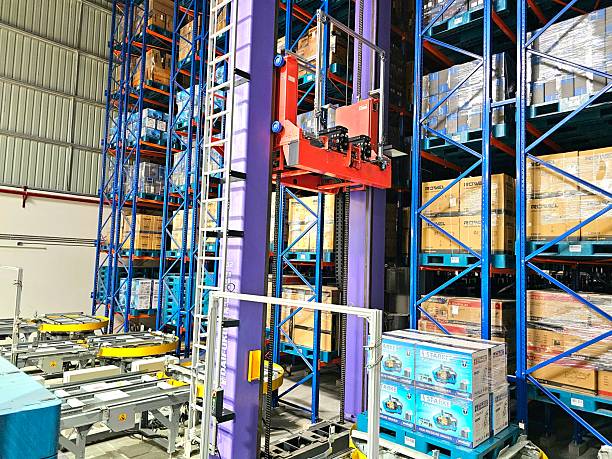
Not every automated storage and retrieval system solves the same problem. A facility moving full pallets of bulk product needs something entirely different from one picking individual items for online orders, and choosing the wrong configuration means paying for capability a warehouse will never actually use. Pallet ASRS and mini-load ASRS represent two distinct approaches, and the right one depends almost entirely on what moves through the building.
This guide breaks down how each system works and where it fits best. For a plain-language introduction to the technology itself, MTLI’s guide to how an ASRS works covers the basics before diving into this comparison.
Two Very Different Machines Solving the Same Space Problem
An Automated Storage and Retrieval System, or ASRS, uses motorized shuttles, cranes, or robotic carriers to store and retrieve inventory automatically, without a forklift operator driving into a rack aisle. Beyond that shared concept, pallet and mini-load systems diverge sharply in scale, speed, and what they are actually built to handle.
A pallet ASRS moves full pallet loads, typically using a crane that travels the length of a narrow aisle, picking up and placing entire pallets at height. A mini-load ASRS works at a much smaller scale, handling totes, bins, or cartons rather than full pallets, and is built for speed and precision on smaller, more frequent picks. Choosing between them starts with a simple question: does the warehouse move full pallets, individual items, or some mix of both?
How a Pallet ASRS Handles Bulk Storage
A pallet ASRS excels where product arrives and leaves in full pallet quantities, with minimal need to break inventory down into smaller units before it ships. Storage-and-retrieval cranes run along fixed rails in narrow aisles, reaching heights far beyond what a standard forklift can safely access, which lets a facility stack pallets much higher than a conventional racking layout allows.
This density gain is the main draw. A pallet ASRS can often double or triple the storage capacity of a standard racking layout within the same building footprint, since narrow aisles and automated retrieval eliminate the wide turning radius a forklift needs. Facilities in manufacturing frequently use pallet ASRS for raw material and finished goods storage, where inventory moves in predictable, full-pallet quantities between production and shipping. Installation of this kind of system is a specialized project, which is why our dedicated ASRS installation team handles the structural, electrical, and software integration together rather than treating them as separate contracts.
How a Mini-Load ASRS Handles Small and Mixed Inventory
A mini-load ASRS operates at a different scale entirely, storing and retrieving totes or bins rather than pallets, often delivering them directly to a picker at an ergonomic workstation rather than requiring staff to walk the aisles themselves. This goods-to-person approach is built for speed on smaller, high-frequency picks rather than bulk movement.
Order fulfillment operations with large SKU counts and frequent, smaller orders are the clearest fit for this type of automated storage system. Businesses in e-commerce fulfillment rely on mini-load systems to hit tight picking accuracy and speed targets that manual picking struggles to match at scale. The same logic applies to operations serving 3PL and logistics clients with varied SKU profiles, where a mini-load ASRS can switch between client inventories without the retooling a pallet-focused system would require.
Matching Each ASRS Warehouse System to Order Profile
The decision between pallet and mini-load generally comes down to what moves through the facility and how often orders call for less than a full pallet.
| Factor | Pallet ASRS | Mini-Load ASRS |
|---|---|---|
| Unit Handled | Full pallets | Totes, bins, cartons |
| Best Order Profile | Bulk, full-pallet orders | High SKU count, small or mixed orders |
| Picking Method | Pallet delivered to dock or staging | Goods delivered to picker at workstation |
| Typical Facility Fit | Manufacturing, bulk distribution | E-commerce, parts, mixed fulfillment |
Many larger facilities in warehousing and distribution end up running both systems side by side, using a pallet ASRS for bulk reserve storage and a mini-load system to handle the picking activity that feeds daily order fulfillment.
Why Canadian Warehouses Are Looking at Automated Storage Now
Labour availability is shaping this decision more than many facility managers expect. Transportation and warehousing carried a job vacancy rate of 3.0 percent as of December 2025, with 26,700 unfilled positions in the sector, according to Statistics Canada’s payroll and job vacancy data. That gap is exactly the kind of staffing pressure an automated storage and retrieval system is designed to ease, since fewer workers are needed to move the same volume of inventory once a system handles retrieval automatically.
Demand on the other end of the supply chain keeps growing too. National survey data shows 94 percent of Canadians went online for personal use as of the most recent count, with online purchasing common across nearly every age group. That level of digital activity keeps pressure on fulfillment speed and accuracy, which is precisely where a mini-load ASRS tends to outperform manual picking. Facilities already investing in broader warehouse automation often add ASRS technology as the next step once conveyor and sortation systems are already in place, since the electrical and controls groundwork is frequently shared between the two. A deeper look at how these systems have taken hold across the country is available in our companion piece on ASRS systems in Canadian warehouses.
Cost, Throughput, and Footprint: Comparing the Investment
Pallet ASRS systems generally carry a higher upfront cost due to the scale of the cranes, rail infrastructure, and structural requirements involved, but they deliver the largest density gains for bulk storage. Mini-load systems cost less per unit of throughput for small-item picking, though they are not designed to replace bulk pallet storage.
| Investment Factor | Pallet ASRS | Mini-Load ASRS |
|---|---|---|
| Relative Upfront Cost | Higher | Lower to moderate |
| Density Gain for Bulk Storage | High | Limited |
| Picking Speed for Small Orders | Lower | High |
| Typical Payback Driver | Space savings, labour reduction | Picking speed, accuracy |
Facilities planning a high-density layout from the ground up often pair pallet ASRS planning with the broader storage strategy covered in our guide to warehouse racking solutions for high-density storage, since racking design and ASRS structural requirements need to be worked out together rather than layered on afterward. Facilities relying on conventional storage racking for the bulk of their inventory sometimes add a mini-load system specifically for fast-moving SKUs, rather than converting the entire facility to automated retrieval at once.
Mistakes That Lead to the Wrong ASRS Choice
The most common mistake is choosing a system based on overall storage volume rather than order profile. A facility with massive inventory but simple, full-pallet order patterns may get little benefit from a mini-load system’s picking speed, while a facility with modest inventory but constant small-order picking may find a pallet ASRS solves the wrong problem entirely.
Underestimating installation complexity is another frequent issue. Both system types require precise structural, electrical, and software integration, and a provider without direct ASRS experience can underestimate what it takes to get the system running reliably. Our installation team handles this coordination directly, rather than treating structural, electrical, and software work as separate contracts managed by the client. Facilities with specialized environments, including cold storage operations, face an added layer of complexity, since automated equipment running in sustained low temperatures needs components and lubricants rated for the environment.
How MTLI Plans and Installs the Right ASRS
MTLI Group starts every ASRS project with an assessment of order profile, SKU count, and inventory movement patterns before recommending pallet, mini-load, or a combined approach. This keeps the recommendation grounded in how a facility actually operates rather than defaulting to whichever system is easiest to sell.
Our ASRS installation team then manages the full build, from structural and electrical work through software integration, under one accountable group rather than splitting the project across separate specialized vendors.
Talk to MTLI About an ASRS Warehouse System
Choosing between a pallet ASRS and a mini-load ASRS comes down to matching the technology to how inventory actually moves through a facility, not to which system sounds the most advanced. The right ASRS warehouse system reduces labour dependency, increases storage density, and speeds up picking in exactly the areas where a facility needs it most.
MTLI Group helps businesses across Canada assess their order profile and design the ASRS warehouse system that fits it. Contact our team to talk through your facility’s automation needs.