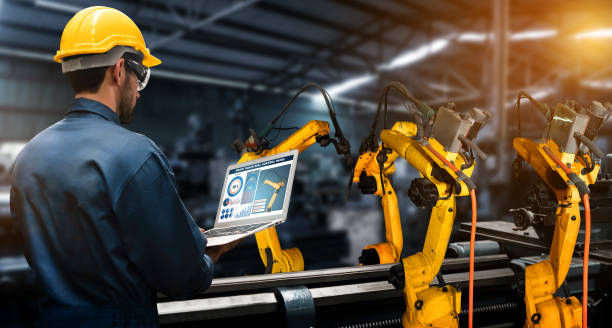
Canadian manufacturing is under pressure from multiple directions at once. Wages are rising. Labour is harder to find. Trade uncertainty has made customers more demanding about delivery times and order accuracy. And the productivity gap between Canadian manufacturers and their U.S. counterparts has been widening for years.
MTLI builds automation infrastructure for manufacturers across Canada. This guide explains what that infrastructure looks like, where it delivers the biggest gains, and why waiting is becoming more expensive than acting.
What Automation Infrastructure Actually Means for a Manufacturing Facility
Automation infrastructure is not a single machine or a single system. It is the combination of equipment, software, and building capability that allows a facility to run with less manual intervention across its key processes.
Non-residential business investment in Canada expanded for the first time in four quarters in Q4 2025, led by a rebound in machinery and equipment. Manufacturing output also rose, supported by gains in motor vehicles and other goods-producing sectors. These are signs of a sector starting to invest again after a period of caution. For manufacturers who invest in the right infrastructure now, the timing is good.
In a manufacturing warehouse context, this means several things working together. It means storage systems that retrieve parts and materials automatically. It means conveyors that move goods between production stages without workers carrying them. It means controls systems that coordinate equipment across zones. And it means a building that was designed to support all of this from the start.
Manufacturing warehouse automation is not the same as automating a production line. It focuses on the movement, storage, and retrieval of materials around the production process, rather than the production process itself. Getting these support functions right often removes more bottlenecks than an upgrade to the production line alone.
The Material Handling Gap in Many Canadian Plants
Walk through most Canadian manufacturing plants and you will find a common pattern. The production equipment is modern. But the way materials move around that equipment is not.
Parts arrive on a truck. A forklift operator unloads them. A worker carries them to a staging area. Another worker moves them to the line when they are needed. When production needs a different component, someone walks the floor to find it.
This manual material handling systems layer is where time and money disappear in manufacturing operations. It creates congestion. It causes delays when the right part is not where the line needs it. And it uses skilled people for tasks that automation can handle better, freeing that workforce for work that actually requires human judgement.
How Automated Material Handling Changes the Production Environment
When you automate the material handling layer, the production line gets fed more reliably. Parts arrive at the right station at the right time. The flow is predictable. The line does not wait.
This reliability comes from a few specific systems working together.
Automated Storage and Retrieval Systems (ASRS) store raw materials, work-in-progress, and finished goods in tall, dense racks. When the line needs a specific part, the system retrieves it in seconds and delivers it to the right station. Workers no longer search for materials or drive forklifts through the facility to find them.
Conveyor systems move components and assemblies between stages without manual transport. A part comes off one process and moves directly to the next via conveyor. The production flow becomes smooth and continuous rather than stop-start.
AGVs, or Automated Guided Vehicles, are self-navigating carts that move pallets and totes along defined or dynamic routes. They replace the routine forklift runs that consume a large share of skilled operator time in a busy plant.
Together, these systems form the material handling backbone of a modern manufacturing facility.
Table 1: Manual vs. Automated Material Handling in Manufacturing
| Function | Manual Approach | Automated Approach |
|---|---|---|
| Parts retrieval | Worker walks to storage, locates part | ASRS retrieves and delivers to the line |
| Inter-stage transport | Forklift operator moves assemblies | Conveyor or AGV moves automatically |
| Inventory tracking | Periodic manual count | Real-time software tracking |
| Production line feeding | Worker monitors and replenishes manually | System triggers replenishment automatically |
| Peak period handling | Additional staff added | Existing automated capacity absorbs demand |
Why Safety Is Part of the Manufacturing Warehouse Automation Argument
Manual material handling in a manufacturing environment carries real physical risk. Musculoskeletal injuries are the most frequent type of lost-time injury in Canadian workplaces, and they are largely tied to repetitive manual handling tasks. These injuries do not just affect workers. They affect production. A worker on lost-time leave is a gap in your capacity that is hard to fill quickly in a tight labour market.
Automating the most physically demanding material handling tasks removes most of these injuries at the source. Workers who previously lifted and carried heavy components now oversee equipment that does the lifting for them. This keeps experienced workers on the floor longer and reduces the training cost of constant replacement hiring.
Factory Automation in the Building: What the Facility Needs to Support
This is where many manufacturers get surprised. The automation equipment is only part of the project. The building has to be able to support it.
ASRS systems require a floor that can support the weight of tall, fully loaded racking. They need ceiling clearance for the racking height and the cranes that travel within them. They need electrical capacity for the motors and control systems. Conveyor systems need structural mounting points and clear pathways between production stages. AGVs need smooth, flat floors and a network infrastructure that supports real-time positioning.
Factory automation projects that skip the building assessment phase often discover these constraints mid-installation. A floor that needs reinforcement. Electrical panels that need upgrading. A ceiling height that limits the racking option the business wanted. Each of these discoveries mid-project adds cost and time that a proper upfront assessment would have caught.
Table 2: Typical Manufacturing Automation Project Phases
| Phase | Core Activity | Estimated Duration |
|---|---|---|
| Facility assessment | Floor, ceiling, electrical, and structural review | 1 to 2 months |
| System design | Equipment selection, layout, and controls planning | 2 to 3 months |
| Construction preparation | Floor reinforcement, electrical upgrades | 2 to 4 months |
| Equipment installation | Racking, conveyors, AGVs, controls | 3 to 6 months |
| Commissioning | Testing, integration, staff training | 1 to 2 months |
The Productivity Argument
Canada's manufacturing productivity gap relative to the United States is real and well-documented. Manufacturers who invest in automation infrastructure do not just reduce costs. They increase output per worker, reduce error rates, and gain the ability to handle more volume without proportional headcount growth.
This matters because labour supply constraints are not going away. The workforce in manufacturing roles is aging. Younger workers are choosing other sectors. Adding more manual labour to solve a throughput problem is becoming harder and more expensive every year. Automation infrastructure builds a production environment that does not depend on finding and retaining large numbers of workers for physically demanding tasks.
Common Manufacturing Warehouse Automation Mistakes When Planning Automation
A few recurring mistakes come up across manufacturing automation projects.
- Automating production but not material handling. A faster production line fed by slow manual material handling creates a new bottleneck, not a faster overall process.
- Choosing equipment before assessing the building. The facility has to support the automation. Find out what it can support before choosing the system.
- Sizing for today's volume. A system designed for current production rates can become a constraint within two to three years of growth.
- Treating automation as a single project. Most successful manufacturing automation programmes roll out in phases, allowing teams to learn and adjust between stages.
- Underestimating controls complexity. The software and controls layer that coordinates automated equipment takes real time to specify, install, and commission. Budget for it properly.
How MTLI Builds Manufacturing Automation Infrastructure
MTLI manages manufacturing automation projects from the initial facility assessment through final commissioning. Our warehouse automation team designs the material handling systems that support your production environment. Our construction and general contracting team handles the structural, electrical, and flooring work the facility needs before equipment arrives.
Our storage and racking solutions team installs the ASRS and racking structures that hold your materials. Our installations crews commission the full system and handle the controls integration. And our facility management services keep the equipment running reliably once production is underway.
Building for the Manufacturing Environment Canada Needs
Canadian manufacturers face real competitive pressure. The solution is not to work harder with the same manual processes. It is to build an infrastructure that makes every hour of production more reliable and more efficient.
Manufacturing warehouse automation addresses the part of the facility that most manufacturers have not upgraded: the material handling layer that supports and feeds the production line. Getting this right reduces costs, reduces injuries, and creates a facility that can grow with the business.
If your facility operates in manufacturing or warehousing and distribution, MTLI can assess your current material handling setup and build a plan that fits your production environment.
Contact MTLI to start a manufacturing warehouse automation assessment for your facility.