Everything You Need to Know About Selective Pallet Racking
Ask ten warehouse managers what kind of racking they run, and most will say the same thing: selective racking. It is the default starting point for a reason, offering direct access to every pallet without the complexity or cost of more specialized systems. This guide covers what selective pallet racking actually is, how it compares to other options, and when it makes sense to look elsewhere.
MTLI Group designs and installs selective pallet racking systems for warehouses across Canada, with selective rack making up the majority of what we install for clients just starting to build out their storage.
The Basics: What Sets Selective Racking Apart
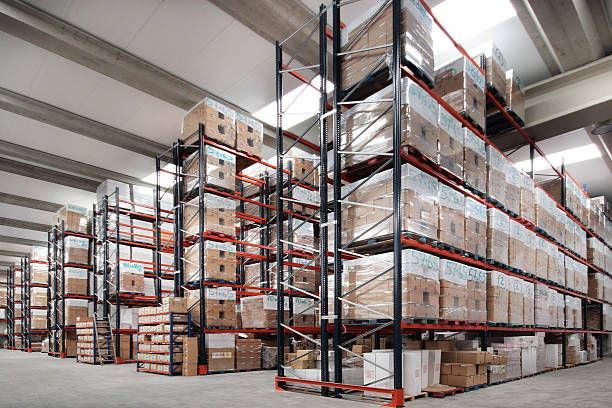
A selective pallet racking stores pallets in single-deep rows, with every pallet position reachable directly from an aisle. No pallet sits behind another, which means a forklift operator can reach any position at any time without moving other product out of the way first.
That direct access is the entire point of selective racking. It trades some density for the ability to pick any SKU on demand, which is exactly what most warehouses with a broad product mix actually need day to day. For a fuller breakdown of how selective rack fits alongside other racking styles, our complete pallet racking guide covers the full range of options a warehouse might consider before settling on a system.
Most facilities that install storage racking for the first time start here, since selective rack is the easiest system to plan, install, and later reconfigure as inventory needs shift.
How a Selective Rack System Is Actually Built
A select rack system comes together from a small set of structural parts, each doing a specific job.
Upright frames anchor to the floor and carry the full vertical load of the system. Horizontal beams connect the frames and create the shelf levels pallets sit on. Wire decking or pallet supports span the beams so product does not slip through. Row spacers and wall ties add lateral stability across longer runs of racking, particularly in taller installations.
Getting these components installed correctly matters as much as choosing the right racking style in the first place. Our racking installation crews handle the full build, from anchoring frames to final safety inspection. For facilities planning taller or heavier-loaded selective rack, our structural racking team engineers the frame specifications to match the actual loads the system will carry.
Selective Racking Compared to Other Configurations
Selective pallet racking is not the only option, and understanding where it fits against denser alternatives helps clarify when it makes sense and when it does not.
Drive-in racking sacrifices individual pallet access for much higher density, letting forklifts drive directly into the rack structure. Push-back racking sits in between, offering moderate density gains while keeping some access flexibility. Pallet flow racking uses gravity to move pallets forward automatically, suited to high-turnover product moving on a first-in, first-out basis. Our detailed comparison of selective and drive-in racking breaks down exactly where each system wins depending on SKU count and turnover pattern.
| Racking Type | Pallet Access | Relative Density |
|---|---|---|
| Selective Racking | Direct, every pallet | Lower |
| Drive-In Racking | Limited, first-in last-out | Higher |
| Push-Back Racking | Moderate | Moderate to high |
| Pallet Flow Racking | FIFO rotation | High |
Facilities that need to maximize storage in a fixed footprint often look at high-density storage options instead, though many end up running a mix, using selective rack for fast-moving SKUs and a denser system for bulk stock.
Why Selective Racking Remains the Default Choice
Selective rack keeps winning out as the standard choice because it matches how most Canadian warehouses actually operate day to day. National data shows the warehousing and storage sector grew 2.7 percent in a single month as of November 2025, contributing to broader growth across the transportation and warehousing sector that quarter, according to Statistics Canada's monthly gross domestic product report. That kind of sustained growth means more businesses are setting up new storage capacity, and most of them are choosing selective rack as the system flexible enough to handle a shifting and growing product mix.
Safety performance is another reason selective racking's simplicity matters. Federally regulated workplaces reported 18,796 disabling injuries in 2023, an increase of 665 from the year before, according to the Labour Program's most recent annual injury report. Selective rack's straightforward, single-deep layout reduces some of the complexity that denser systems introduce, since forklift operators are not manoeuvring into or out of the rack structure itself. Our guide to industrial warehouse racking types and installation covers how racking choice affects both efficiency and day-to-day safety across a facility.
Cost, Speed, and Space: Running the Numbers
Selective racking is generally the least expensive rack type to purchase and install, since it uses standard components without the specialized rails, gravity rollers, or nested frames that denser systems require. Installation timelines are shorter too, which matters for businesses trying to get a new facility operational quickly.
The tradeoff shows up in storage density. A selective system typically uses more floor space per pallet stored than a drive-in or pallet flow configuration, since aisles are needed between every row to allow forklift access.
| Factor | Selective Racking | Denser Configurations |
|---|---|---|
| Upfront Cost | Lower | Higher |
| Installation Time | Shorter | Longer |
| Storage Density | Lower | Higher |
| Pallet Access | Immediate, every position | Limited by rotation pattern |
For facilities that eventually outgrow their single-level footprint, pairing selective rack with a mezzanine platform is a common next step, adding a second storage level above the existing racking without expanding the building itself. Businesses planning a much larger, ground-up storage facility sometimes look further still, toward rack-supported building designs where the racking structure itself carries the building's roof and walls.
Errors That Shorten a Rack System's Lifespan
The most common mistake is overloading beams beyond their rated capacity, often because pallet weights were never properly documented before the system was designed. This creates a serious structural risk that can go unnoticed until a beam actually fails under load.
Skipping regular inspections is another frequent issue. Daily forklift traffic causes gradual impact damage that weakens frames over time if left unaddressed. Our guide on the warning signs a racking system needs inspection walks through what to watch for between formal safety audits. Businesses also sometimes skip proper engineering sign-off during design, which can create compliance gaps down the line. Working with a team that manages engineering and permits as part of the racking project avoids this problem before installation even begins.
MTLI's Work With Selective Pallet Racking
MTLI Group designs and installs selective pallet racking as part of a single accountable project, covering everything from initial layout through final installation and inspection. Our team calculates load requirements, aisle spacing, and beam sizing specific to each client's pallet weights and forklift equipment rather than applying a generic template.
For businesses comparing providers before committing to a project, our guide to choosing a pallet racking installation company outlines what to look for beyond price alone.
Get Selective Racking Installed the Right Way
Selective racking remains the most practical starting point for most warehouses, offering direct pallet access, straightforward installation, and lower upfront cost compared to denser alternatives. Getting a select rack system properly engineered and installed protects both the investment and the people working around it every day.
MTLI Group works with businesses across Canada to design and install selective racking suited to their inventory and layout. Contact our team to talk through your racking project.