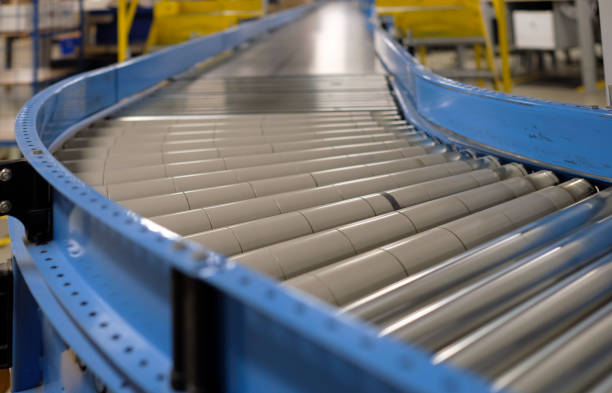
A warehouse built fifteen or twenty years ago was not designed for today's order volume, and the conveyor system running through it usually shows the strain first. Conveyor retrofits let facility engineers extend the life of an existing building without a full teardown, upgrading the systems that actually move product rather than replacing the structure around them. MTLI Group carries out warehouse automation upgrades across Alberta facilities where the building is sound but the equipment inside it has fallen behind.
This guide covers when a retrofit makes sense, what conveyor modernization actually involves, and how to avoid the mistakes that shorten the payback on an upgrade project.
What a Conveyor Retrofit Actually Involves
A conveyor retrofit replaces or upgrades sections of an existing conveyor system rather than tearing out the entire line, often carried out with the support of experienced conveyor system installers to ensure seamless integration. That might mean swapping worn belts and rollers for higher-capacity models, adding sensors and controls to sections that were previously manual, or integrating new sortation technology into a line that was built before modern picking software existed.
Retrofits differ from a full replacement in scope and cost. A facility engineer evaluating conveyor retrofits usually starts by mapping where the current system creates bottlenecks, whether that is a slow merge point, an undersized incline, or a control system that cannot talk to the warehouse management software running everything else.
The goal is to extend the useful life of the building and the surrounding infrastructure while bringing the moving parts up to current throughput and safety standards. For facilities running older equipment, this often costs a fraction of new construction while solving the actual bottleneck causing delays.
This distinction matters most when a facility's leadership is weighing a retrofit against a new lease or a ground-up build. A building with good bones, adequate ceiling height, and solid floor loading can often absorb another decade of useful service once the conveyor and control systems inside it are brought current, which changes the entire capital planning conversation.
Core Components of Conveyor Modernization
Most projects in this category touch a similar set of components, even when the scope varies by facility.
- Drive and motor upgrades: Older motors often run less efficiently and lack the variable speed control that newer systems use to match conveyor speed to real-time demand.
- Sensor and control integration: Adding photo-eyes, encoders, and programmable logic controllers (PLCs) lets a retrofit line communicate with a warehouse management system, closing gaps in inventory accuracy.
- Belt and roller replacement: Worn belts and rollers are a leading cause of unplanned downtime, and replacing them is often the fastest way to reduce breakdowns.
- Sortation upgrades: Adding or upgrading diverters and sortation modules increases throughput without expanding the conveyor's physical footprint.
- Safety system updates: Retrofits are also a chance to bring guarding, e-stops, and lockout points up to current standards, which matters both for compliance and for reducing workplace injury risk.
Facilities that pair conveyor upgrades with better storage and racking layouts tend to see the biggest throughput gains, since a faster conveyor still bottlenecks at a poorly designed storage zone.
For facilities in cold storage or temperature-sensitive operations, retrofits also need to account for how new motors and controls perform in cold rooms, since standard components are not always rated for sustained low temperatures.
Types of Warehouse Upgrades Worth Considering Alongside a Retrofit
A conveyor retrofit rarely happens in isolation. Facility engineers often bundle it with other warehouse upgrades to get more value from the same downtime window.
| Upgrade Type | What It Solves | Best Paired With |
|---|---|---|
| Conveyor retrofit | Bottlenecks, breakdowns, outdated controls | WMS software upgrade |
| Racking reconfiguration | Poor storage density, awkward pick paths | Conveyor sortation upgrade |
| Lighting and electrical upgrades | Aging infrastructure, energy cost | Any major retrofit project |
| Dock door and leveler upgrades | Slow receiving and shipping | Conveyor speed increases |
| Fire suppression updates | Code compliance, insurance requirements | Structural or racking work |
Bundling these projects during a single shutdown window reduces total downtime compared to running separate projects months apart, which matters most for facilities that cannot afford extended closures.
Why This Matters: The Investment Case in Alberta
Warehouse infrastructure investment is accelerating across Canada, and Alberta is seeing some of the strongest growth of any province.
Capital investments in Canada's transportation and warehousing sector are expected to top $61.0 billion in 2026, more than double the size of annual investments prior to 2018, signaling that facilities across the country are prioritizing infrastructure upgrades right now.
Manufacturing capital outlays in Alberta were projected to increase 25.8 percent to 6.0 billion dollars in 2025, driven in part by new facility construction that will need connected, modern material handling systems from day one.
This kind of growth puts pressure on older facilities to keep pace. A warehouse running a fifteen-year-old conveyor system next to newer, automated competitors is at a real disadvantage on speed, accuracy, and labour cost per order.
For facility engineers in Alberta specifically, this trend also means more competition for skilled labour as new facilities come online. A retrofit that reduces manual bottlenecks does more than improve throughput. It also reduces how many additional workers a facility needs to hire in a tightening labour market, which is often as important to leadership as the speed gains themselves.
The Financial Case for Retrofitting Instead of Rebuilding
Facility engineers pitching a retrofit project to leadership need numbers that hold up next to the alternative of new construction.
| Factor | New Construction | Conveyor Retrofit |
|---|---|---|
| Upfront cost | Highest, full building and systems | Lower, targeted equipment upgrade |
| Project timeline | Often 12 to 24 months | Often weeks to a few months |
| Operational disruption | Full closure or relocation required | Can often be phased around operations |
| Throughput improvement | Highest ceiling | Strong gains, bounded by existing structure |
| Best fit | Facility has outgrown its footprint | Building is sound, equipment has aged out |
A retrofit will not solve every problem. If a facility has genuinely outgrown its footprint, no amount of equipment upgrading fixes a building that is simply too small. But for a structurally sound facility with aging equipment, a retrofit usually delivers a faster payback than starting over.
Common Mistakes in Conveyor Retrofit Projects
A few recurring mistakes reduce the value of an otherwise well-planned retrofit.
Upgrading conveyor speed without addressing the storage or picking bottleneck downstream, which just moves the constraint instead of removing it. Choosing controls that cannot integrate with the existing WMS, forcing manual workarounds that undercut the whole point of the upgrade. Scheduling the retrofit without a clear shutdown plan, leading to longer-than-expected downtime during peak season. Treating the retrofit as purely mechanical and skipping the safety system review that should come with any major equipment change.
Facility engineers who map the full material flow before scoping a retrofit, rather than just the conveyor itself, consistently get better results from the project.
How MTLI Group Supports Conveyor Retrofits
MTLI Group works as a single, accountable partner for Alberta facilities planning conveyor retrofits, so engineers are not coordinating separate vendors for mechanical, electrical, and software work.
On the structural side, MTLI handles construction and general contracting for any building modifications a retrofit requires, from reinforced flooring to updated electrical service.
MTLI also manages full installation of upgraded conveyor sections, sortation modules, and the controls that tie them into existing warehouse software.
For facilities in manufacturing running continuous production lines, MTLI plans retrofit work around existing shift schedules to minimize disruption to output.
For operations in food and beverage production, retrofit timing often has to work around sanitation schedules and shelf-life pressures, which makes phased, zone-by-zone upgrades especially valuable.
Once the retrofit is complete, ongoing facility maintenance keeps the upgraded system running at the throughput and safety levels the project was built to deliver.
Plan Your Conveyor Retrofit
Conveyor retrofits let facility engineers extend the useful life of a warehouse without the cost and disruption of a full rebuild. Done well, they close the gap between an aging facility and the throughput expectations of today's order volumes.
MTLI Group has supported warehousing and distribution clients across Alberta with retrofit projects scoped around real operational constraints, not just equipment specs on paper.
If your facility is due for an upgrade, reach out to MTLI Group to talk through what a retrofit could look like for your operation.