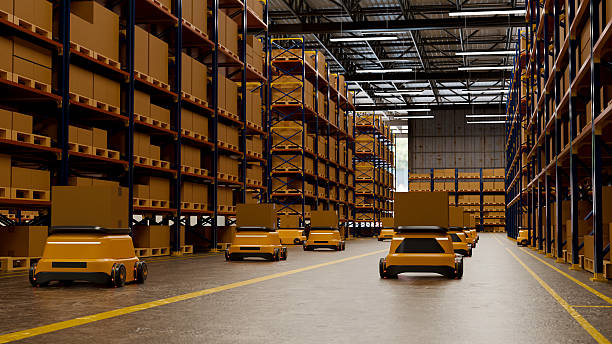
A few years ago, autonomous mobile robots felt like a technology reserved for a handful of massive fulfilment centres. That is no longer the case. Mid-size Canadian warehouses are now deploying AMRs to handle picking, transport, and replenishment tasks that used to eat up a huge share of daily labour hours.
MTLI Group works with facilities across Canada on both AMR deployments and the broader automation systems they connect to. Here's what these robots actually do, where they fit best, and how they compare to other automation technologies you may already be considering.
What Are AMRs and How Are They Different from Traditional Equipment?
Autonomous mobile robots navigate a warehouse independently, using sensors and mapping software rather than fixed tracks or wires in the floor. They move totes, carts, or shelving units to workers, cutting down on the walking and transport time that eats up a large share of a picker's shift.
That independence is what separates AMRs from older automated guided vehicles, which typically follow a fixed path and need the route reprogrammed for any layout change. AMRs adjust their route in real time, which makes them far easier to redeploy as a facility's needs shift.
This flexibility is part of why AMRs have moved so quickly from a niche technology to a mainstream one. A facility can start with a handful of robots in a single zone, then expand or reroute them as order patterns change, without the costly rework a fixed system would require.
Why Canadian Warehouses Are Adopting AMRs Faster Than Ever
Order volumes keep climbing, and the labour needed to fulfil them by hand is not keeping pace. According to Statistics Canada, seasonally adjusted retail e-commerce sales climbed 9.9 percent to $5.7 billion in June 2026, now accounting for 7.7 percent of total retail trade. That growth translates directly into more picking, packing, and transport volume for the warehouses fulfilling those orders.
Facilities absorbing that growth without proportionally growing headcount are increasingly turning to AMRs as a practical way to close the gap between order volume and available labour.
That gap tends to show up first in peak seasons, when order volume spikes well beyond what a facility can comfortably staff for with temporary labour alone. AMRs give facilities a way to handle that spike without permanently overstaffing during quieter months.
Types of AMR Warehouse Robots
Not all AMRs perform the same job. The right type depends on your facility's layout, order profile, and what task is eating up the most labour hours.
Here's a breakdown of the most common AMR categories deployed in Canadian warehouses today.
| AMR Type | Primary Function | Best Fit |
|---|---|---|
| Goods-to-person robots | Bring shelving units directly to a stationary picker | High-SKU-count fulfilment operations |
| Transport and tugger robots | Move totes or carts between zones | Facilities with long, repetitive travel paths |
| Sortation robots | Sort items into designated bins or chutes | High-volume parcel and order sortation |
| Inventory robots | Scan and audit stock levels autonomously | Facilities needing frequent cycle counts |
Facilities usually start with one category, most often transport robots, before expanding into a broader warehouse automation programme once the initial deployment proves out. Starting narrow also gives operations teams a chance to learn how staff and robots work together before scaling to a facility-wide rollout.
AMRs vs ASRS: How the Two Technologies Compare
AMRs and automated storage and retrieval systems solve related problems in very different ways, and facilities often end up using both rather than choosing one over the other.
An ASRS company typically designs fixed infrastructure, cranes, shuttles, or lifts that retrieve inventory from dense, high-rise storage. AMRs, by contrast, operate on the warehouse floor itself, moving inventory horizontally between zones rather than retrieving it from vertical storage. A facility might use an ASRS system to store high-density inventory and AMRs to move that inventory once it reaches the floor level, and the best results usually come from a single ASRS company managing both sides of that handoff.
Working with an experienced ASRS company that also understands AMR deployment tends to produce a more coordinated result than treating the two as entirely separate projects.
Addressing the Labour Gap with Warehouse Robotics Company
Labour availability is not just a perception. Statistics Canada's Job Vacancy and Wage Survey tracks ongoing shifts in vacancies for material handlers and related occupations across the country. It reflects how tightly the labour market for these repetitive, physically demanding roles continues to move.
Warehouse robotics solutions do not eliminate the need for staff. But they do shift labour away from repetitive transport tasks and toward higher-value work like quality control and exception handling. That shift matters most in facilities where hiring for transport-only roles has become genuinely difficult.
It also changes the kind of role facilities need to hire for. Instead of recruiting purely for physical stamina and repetitive walking, this shift moves demand toward workers comfortable troubleshooting equipment and handling exceptions the robots flag.
Where AMRs Deliver the Fastest ROI
AMR payback periods vary widely depending on order volume, labour costs, and how much of the current workflow involves repetitive travel.
Facilities tend to see the fastest returns when:
- Order volume is high and travel time makes up a large share of labour hours
- Labour costs or availability are creating consistent hiring pressure
- SKU counts are high, making goods-to-person picking especially valuable
- Peak seasons create volume spikes that are hard to staff for manually
For a broader look at how these numbers typically work out, our complete guide to warehouse automation ROI walks through the full calculation in more detail.
Integration Challenges When Adding AMRs to an Existing Facility
Deploying AMRs into a facility that is already running day to day requires more planning than a greenfield installation.
A few common integration hurdles:
- WMS connectivity: Robots need to communicate cleanly with your existing warehouse management system
- Floor conditions: Uneven flooring or tight aisles can limit robot navigation
- Network coverage: Reliable wireless coverage across the whole facility is essential
- Staff training: Workers need to understand how to safely operate alongside moving robots
Coordinating a phased installation plan helps facilities avoid disrupting daily operations while the system comes online.
Choosing the Right Warehouse Robotics Company for Your Facility
Not every provider offers the same scope of support. Some sell hardware and step back, while others manage design, integration, and ongoing support as one coordinated project.
A capable warehouse robotics company should be able to assess your actual order data, walk your floor, and recommend a deployment based on your specific operation rather than a generic template. This is where working with an established ASRS company pays off. This is since the same team can evaluate both mobile and fixed automation options side by side. Facilities in the warehousing and distribution sector especially benefit from a partner who understands both the robotics and the surrounding infrastructure it depends on.
Electrical and Infrastructure Considerations for AMR Deployment
AMRs need reliable power for charging stations, consistent network coverage, and floor conditions suited to autonomous navigation. Facilities sometimes underestimate how much electrical and infrastructure work sits behind a smooth AMR rollout.
Charging infrastructure alone can require meaningful electrical capacity, particularly for larger fleets running multiple shifts. Coordinating that work with an experienced electrical partner before robots arrive avoids delays once the equipment is on-site and ready to deploy.
How MTLI Group Supports AMR and ASRS Projects Together
MTLI Group brings automation, electrical, and installation expertise together under one team, which matters most when a facility is running AMRs alongside fixed infrastructure like ASRS or conveyor systems. Facilities that already work with an ASRS company for storage often find it easier to add AMRs through that same relationship rather than starting over with a new vendor.
As an ASRS company that also delivers AMR integration, we look at how these technologies work together rather than recommending one in isolation. Once your system is live, ongoing facility maintenance support keeps both the fixed and mobile sides of your automation running reliably.
Bringing AMRs Into Your Operation
AMRs are no longer an experimental technology reserved for the largest fulfilment centres. For many Canadian warehouses, they are becoming a practical answer to rising order volumes and tightening labour markets.
Getting the deployment right depends on choosing the right robot type, planning for integration challenges, and working with a partner who understands how AMRs fit alongside your existing infrastructure. Facilities that treat the rollout as part of a broader automation strategy, rather than an isolated purchase, tend to get the most value out of the investment over time.
MTLI Group can help you evaluate whether AMRs make sense for your facility. Contact our team to discuss your goals and next steps.