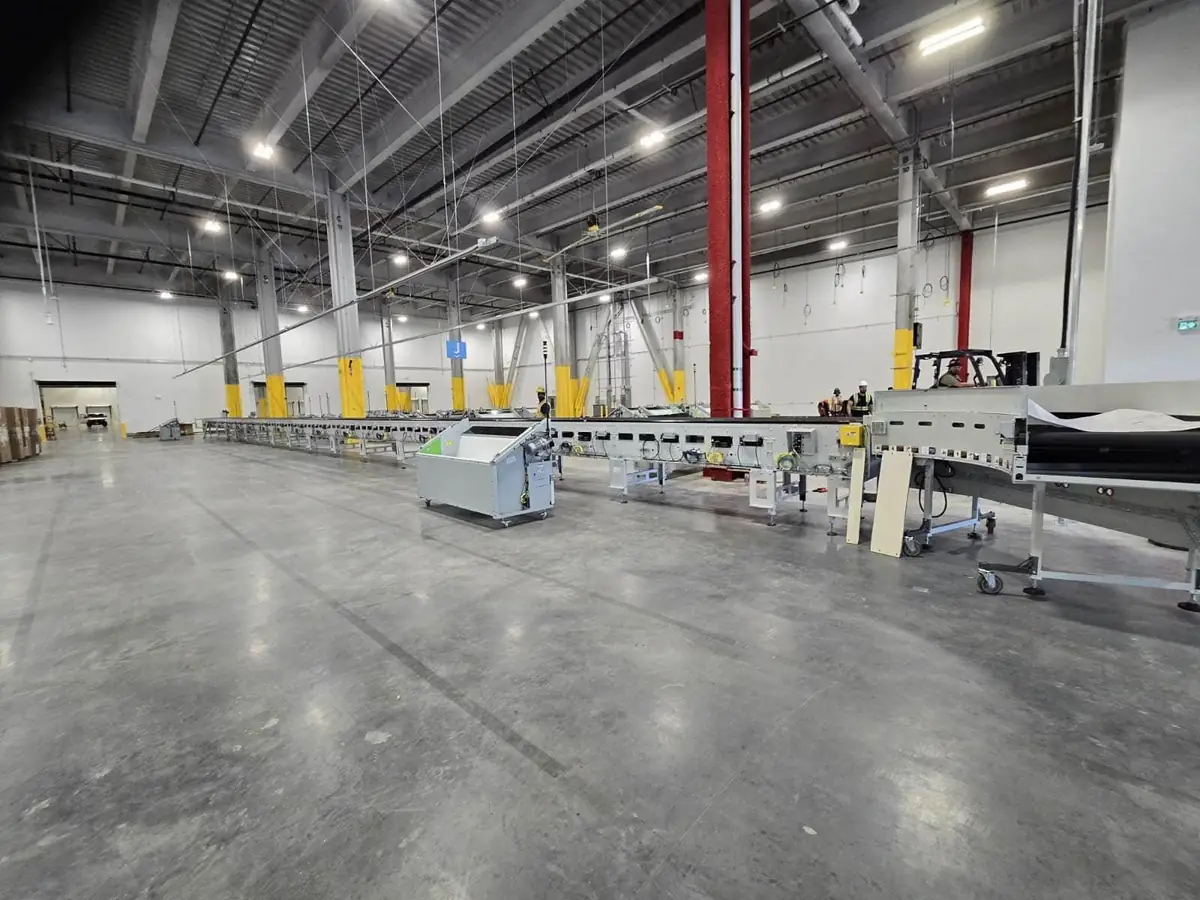
- Productivity Loss: Every moment of downtime is a moment that orders aren't being picked, packed, and shipped. This directly impacts throughput and revenue.
- Idle Labour Costs: Your skilled workforce is left waiting, yet their wages continue to accumulate, turning productive assets into liabilities.
- SLA Penalties & Reputational Damage: Failing to meet delivery promises to retailers or end customers can result in financial penalties and, more importantly, a loss of trust.
- Upstream & Downstream Disruptions: A halt in the distribution centre creates backlogs at the receiving dock and delays for outbound transportation partners, disrupting the entire supply chain.
- Data Collection: IoT (Internet of Things) sensors are installed on critical components of your <a href='/services/warehouse-automation'>warehouse automation</a> systems. These sensors gather millions of data points on variables like vibration, temperature, acoustics, voltage, and rotational speed.
- Pattern Recognition: AI and ML algorithms analyze this continuous stream of data, learning the 'normal' operational signature of each piece of equipment. They can detect minuscule deviations and patterns that are completely invisible to human senses.
- Failure Prediction: When the algorithms detect a pattern that correlates with known failure modes, for example, a specific vibration frequency that precedes motor bearing failure, they generate a predictive alert.
- Actionable Insights: The system doesn't just say 'a problem is coming.' It provides specific, actionable intelligence: 'Motor 7 on Conveyor Line B shows a 90% probability of bearing failure within the next 72 hours.' This allows your maintenance team to schedule a precise, non-disruptive repair during a planned quiet period.