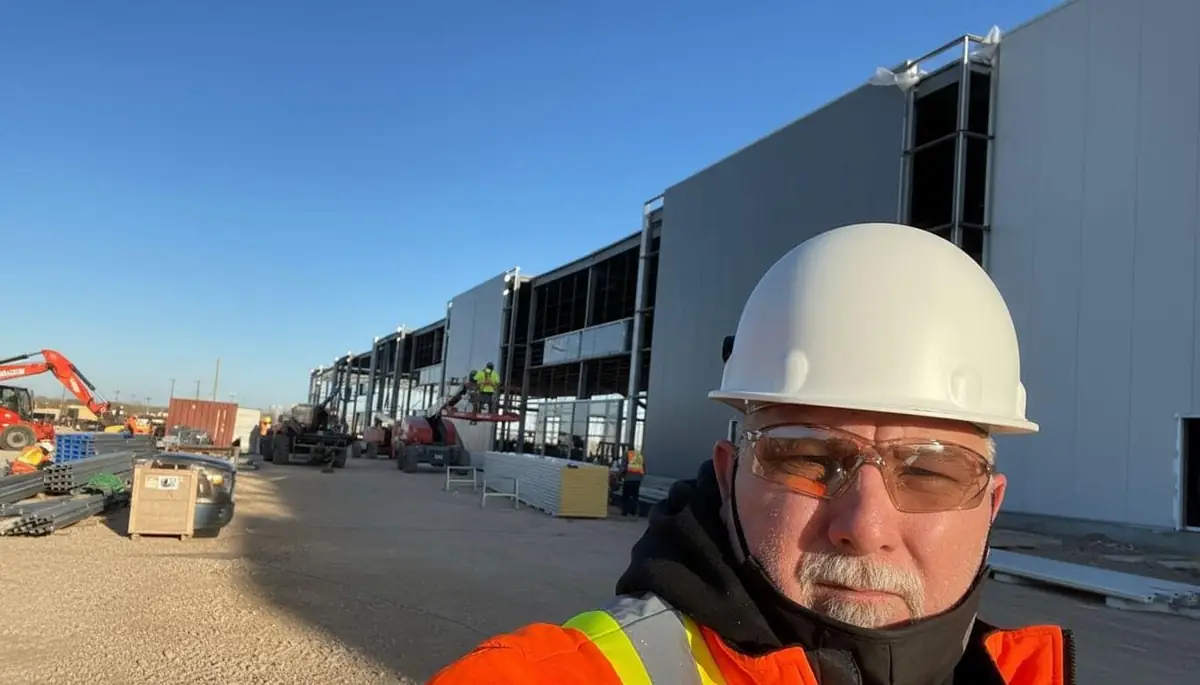
As we approach 2025, the industrial real estate landscape is undergoing a profound transformation. The days of 'growth at any cost' have transitioned into an era of strategic efficiency, where warehouse construction is no longer just about four walls and a roof, but about creating high-performance logistical hubs. For stakeholders in North America, navigating the complexities of fluctuating material costs, a tightening labor market, and the rapid integration of automation is more critical than ever. This article provides a comprehensive deep dive into the 2025 outlook for warehouse construction, offering data-driven insights into pricing trends, the technological shifts redefining facility design, and the logistical hurdles that could impact your project timelines. Whether you are planning a greenfield development or a massive retrofit, understanding these macro-economic and industry-specific drivers will be the difference between a project that scales and one that stalls. We will explore the stabilization of the supply chain, the rising 'green' mandate in industrial builds, and how smart facility management is becoming a pre-construction priority.
1. The 2025 Cost Outlook: Stabilization Amidst Inflationary Pressures
Heading into 2025, the 'sticker shock' that defined the post-pandemic era is beginning to level off, but costs remain significantly higher than historical averages. We anticipate that warehouse construction costs will see a modest increase of 3% to 5% year-over-year, driven primarily by specialized components rather than raw commodities. While the price of lumber and basic steel has stabilized, the cost of high-demand materials, such as electrical switchgear, specialized concrete additives, and HVAC systems for cold storage, continues to face upward pressure due to lead times and manufacturing backlogs.
Labor remains the most volatile variable in the 2025 budget. The industrial construction sector is grappling with a persistent shortage of skilled tradespeople, particularly electricians and automation technicians. In major logistics hubs like the Inland Empire, Dallas-Fort Worth, and the Greater Toronto Area, labor rates are expected to rise by 4-6% as contractors compete for a limited pool of talent. For developers, this means that 'soft costs', design, engineering, and project management, are taking up a larger percentage of the total project budget. To mitigate these risks, early procurement strategies and fixed-price contracts for critical materials are becoming the industry standard to lock in pricing 12 to 18 months ahead of groundbreaking.
2. The Rise of 'Smart' Shells: Integrating Automation at the Foundation
In 2025, the distinction between 'warehouse construction' and 'automation installation' is blurring. Historically, automation was treated as a secondary phase; today, the facility is designed around the technology. We are seeing a surge in 'Smart Shell' construction, where the building's physical parameters, floor flatness, ceiling heights, and power distribution, are engineered specifically for Autonomous Mobile Robots (AMRs) and Automated Storage and Retrieval Systems (AS/RS).
The cost implications are significant but offer a high ROI. For instance, achieving a Superflat (SF) floor rating, essential for high-reach narrow aisle forklifts and robotic precision, can add 15-20% to the concrete budget, but it reduces long-term maintenance costs and increases operational speed by up to 25%. Furthermore, 2025 projects are increasingly incorporating mezzanine-ready foundations and enhanced power grids (often exceeding 4,000 amps) to support the massive energy requirements of sorting systems and EV charging fleets. Developers who fail to account for these requirements during the construction phase face astronomical retrofitting costs later. The trend is clear: build for the machine, not just the pallet.
3. Sustainable Construction and the 'Green' Premium
Sustainability is no longer a corporate social responsibility (CSR) checkbox; it is a financial imperative. In 2025, institutional investors and tenants are demanding LEED-certified or Net-Zero Ready facilities to meet ESG (Environmental, Social, and Governance) targets. This shift is influencing construction materials and methods across North America. We are seeing a 10-12% increase in the use of carbon-cured concrete and recycled steel, which, while slightly more expensive upfront, offers long-term tax incentives and lower operational energy costs.
Solar-ready roofing is now a standard requirement for over 60% of new industrial builds. By reinforcing roof structures to support photovoltaic (PV) arrays during the initial build, owners save hundreds of thousands of dollars in future structural reinforcements. Additionally, the integration of smart building envelopes, using high-R-value insulated metal panels (IMPs) and intelligent LED lighting systems, is reducing facility energy consumption by 30-40%. While these 'green' features can add 5-8% to the initial construction cost, the reduction in utility expenses and the increase in property valuation (often referred to as the 'Green Premium') make it a fiscally sound decision for 2025 and beyond.
4. Navigating Supply Chain Lead Times and Project Timelines
While the global supply chain has largely recovered from the disruptions of 2021-2022, specific 'choke points' remain that will dictate project timelines in 2025. Electrical components, specifically transformers and switchgear, still carry lead times of 50 to 80 weeks in some regions. This has forced a shift in the construction lifecycle: developers are now ordering electrical equipment before they even break ground or secure a final tenant. This 'pre-procurement' model is essential to avoid 6-month delays at the end of a project when the building is otherwise ready for occupancy.
Permitting and municipal approvals also remain a significant hurdle. As industrial sprawl moves into secondary and tertiary markets, local governments are becoming more stringent regarding traffic impact studies and environmental runoff. On average, the pre-construction phase (entitlements and permitting) now takes 20% longer than it did five years ago. To combat this, successful developers are utilizing Building Information Modeling (BIM) to create 'digital twins' of the facility, allowing for faster municipal reviews and reducing on-site change orders. In 2025, the most successful projects will be those that prioritize 'speed to entitlement' as much as 'speed to build.'
5. Verticality and High-Bay Density: Maximizing the Footprint
With industrial land prices in premium corridors reaching record highs, the only way to go is up. 2025 will see a continued trend toward 'High-Bay' warehouses with clear heights exceeding 40 or even 50 feet. This vertical expansion allows for a much higher density of racking systems, effectively doubling or tripling the pallet positions within the same square footage. However, building vertically introduces unique construction challenges, particularly regarding fire suppression and racking stability.
ESFR (Early Suppression, Fast Response) sprinkler systems must be meticulously engineered for these heights, often requiring in-rack sprinklers that add complexity to the plumbing and racking installation. Furthermore, the structural requirements for the slab-on-grade become more intense to support the massive point loads of high-density racking. We are seeing an increase in the use of 'Rack-Supported Buildings,' where the racking system itself forms the structural frame of the warehouse. This method can reduce construction timelines by 15% and steel usage by 10%, but it requires a highly specialized construction partner who understands the intersection of structural engineering and warehouse logistics.
6. Facility Management and Lifecycle Maintenance Post-Construction
The 2025 outlook emphasizes that a warehouse is a living asset. Forward-thinking companies are now integrating Facility Management (FM) software and IoT sensors during the construction phase to monitor the 'health' of the building from day one. Sensors embedded in the concrete can monitor moisture levels, while vibration sensors on conveyor systems can predict mechanical failure before it occurs. This transition toward 'Predictive Maintenance' is a major shift from the 'Break-Fix' mentality of the past.
The cost of maintaining a modern automated warehouse is roughly 3-5% of the initial build cost annually. By investing in high-quality materials during construction, such as durable rack protectors, high-cycle overhead doors, and energy-efficient HVAC, facility managers can significantly reduce this O&M (Operations and Maintenance) spend. In 2025, the total cost of ownership (TCO) is becoming the primary metric for success, rather than just the initial price per square foot. This holistic approach ensures that the facility remains an asset rather than a liability as it ages in an increasingly demanding logistics environment.
Conclusion: Building for the Future
As we look toward 2025, the warehouse construction industry is defined by a paradox: while raw material costs are stabilizing, the complexity and technological requirements of these facilities are driving total investment higher. Success in this environment requires a departure from traditional 'siloed' construction. Developers, tenants, and contractors must collaborate early in the design phase to integrate automation, sustainability, and vertical density into a cohesive, high-performing asset. The key takeaways for 2025 are clear: prioritize early procurement of long-lead electrical items, invest in high-spec flooring and power to future-proof for automation, and never overlook the long-term ROI of sustainable building practices.
At MTLI Group, we specialize in bridging the gap between complex industrial construction and operational excellence. From precision racking installation and warehouse automation to comprehensive facility management and industrial builds, our team provides the expertise needed to navigate the evolving 2025 landscape. Whether you are expanding your footprint or optimizing an existing facility, MTLI Group is your partner in building the infrastructure of tomorrow. Contact us today to discuss how we can bring your next project to life with efficiency and precision.